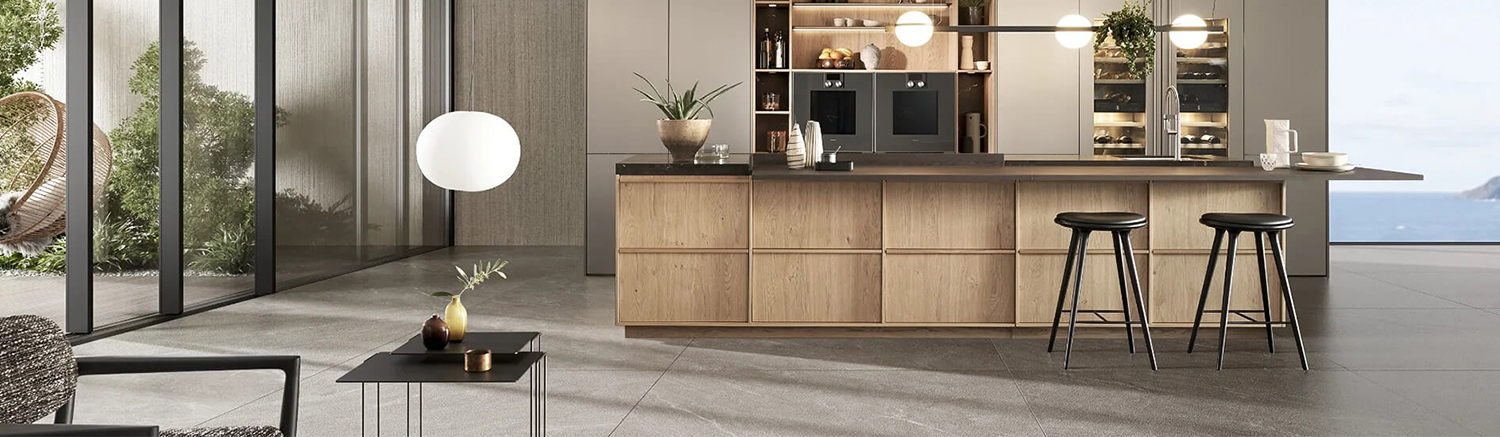
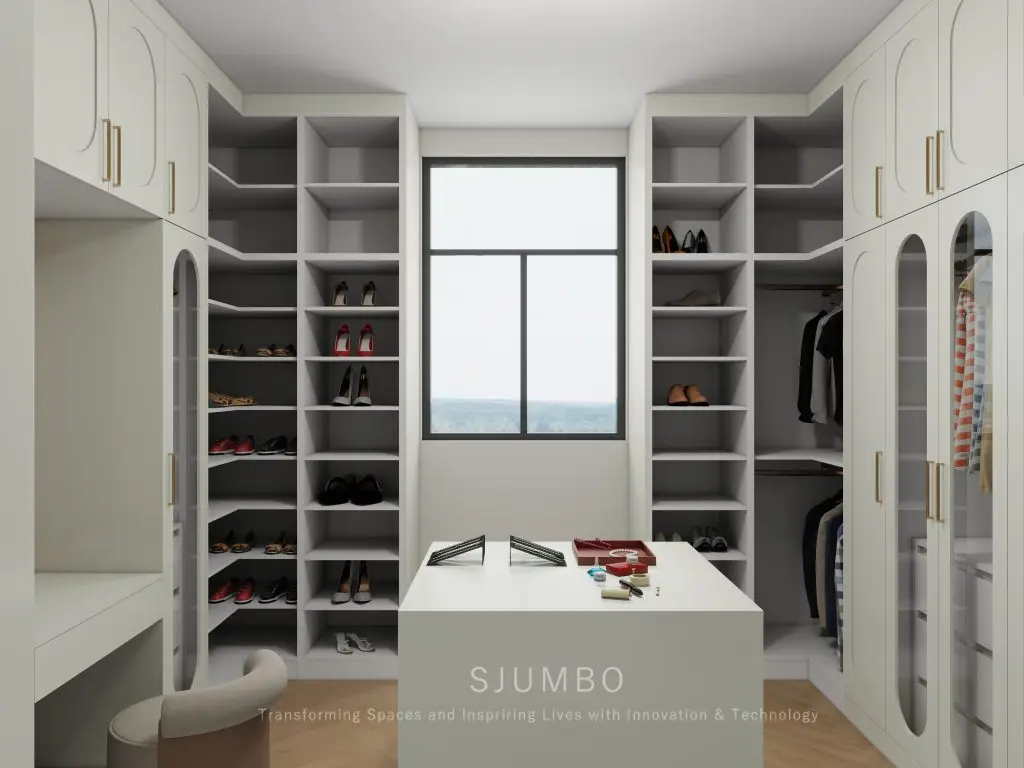
White lacquer cabinets are the top choice for most home renovations, delivering a clean, bright and versatile aesthetic that fits nearly all interior styles. However, most homeowners notice an annoying problem after 1 to 3 years of use: white cabinet doors gradually turn yellow and dull, with obvious color differences between sunlit panels and inner cabinet surfaces. No amount of cleaning can restore the original pure white finish. In fact, yellowing white lacquer cabinet doors is never a simple grease accumulation issue, but an irreversible oxidation defect caused by poor paint materials and flawed craftsmanship. With 16 years of experience in whole-home customization and thousands of completed projects, SJUMBO combines professional laboratory aging test data to reveal the real causes of cabinet discoloration and teach you how to select anti-yellowing white cabinets to avoid yellowing fundamentally.
💡 Unsure whether your custom cabinet paint finish is anti-yellowing? Feel free to contact the SJUMBO team for a free paint material identification service and request physical anti-yellowing white lacquer samples for intuitive comparison!
Many building material merchants attribute cabinet yellowing to heavy kitchen fumes and insufficient daily cleaning, which is a misleading statement. The core reason for persistent white custom cabinet doors yellowing lies in two invisible chemical oxidation reactions, which cannot be completely eliminated by routine wiping or detergent cleaning.
White lacquer cabinets placed in open kitchens or beside floor-to-ceiling windows are continuously exposed to ultraviolet rays in natural sunlight. Low-grade paint formulas lack professional protective structures; UV rays break resin molecular chains and form colored chromophores, turning pure white panels into cream or dark yellow over time. Spaces with sufficient natural light accelerate paint aging, and high-gloss white finishes show more obvious discoloration than matte ones.
Have you ever noticed that cabinet interiors, wardrobe back panels and windowless storage cabinets also turn yellow without direct sunlight? This is defined as dark yellowing in the industry. Cheap aromatic curing agents used in ordinary paint react slowly with trace ammonia in the air and board volatile substances in closed, slightly humid environments, forming accumulated yellow stains. This perfectly explains why most cabinets have white outer panels and yellow inner surfaces with obvious color stratification.
Three mainstream paint types are widely used for custom white cabinet doors: nitrocellulose paint, standard polyurethane paint and high-grade aliphatic acrylic polyurethane paint, with huge gaps in anti-yellowing performance and durability. Adopting the latest 2026 QUV ultraviolet accelerated aging equipment, we completed 500-hour high-intensity simulated sun exposure tests to restore long-term household wear and tear. Combined with accurate Delta E color difference data and visual effects, we help users avoid pitfalls and select premium UV-resistant lacquer finish.
| Paint Type | Delta E Color Difference (500h Aging) | Long-Term Visual Performance | Wear & Stain Resistance | Selection Advice & Application Scenarios |
|---|---|---|---|---|
| NC Nitrocellulose Paint | ΔE>6.0 (Severe Color Distortion) | Obvious yellowing within 3-6 months, overall dull and smoky appearance | Low hardness, easy to scratch and stain, vulnerable to daily collision | ❌ Not Recommended! Only for temporary low-budget cabinets and rental houses, unsuitable for household kitchen and bedroom custom cabinets |
| Standard Aromatic PU Paint | ΔE 2.5~4.0 (Obvious Color Difference) | Gradual dark yellowing within 1-2 years, severe color difference between inner and outer panels | Medium hardness, resistant to mild friction but vulnerable to long-term oil penetration | ⚠️ Use with Caution! Only applicable to dark storage areas with no sunlight, not for kitchens, bathrooms and balconies with high usage frequency |
| SJUMBO Aliphatic Acrylic PU Paint | ΔE<1.5 (Negligible Color Difference, Industry High Standard) | Maintains pure white finish for years, no visible discoloration to human eyes | High hardness, scratch, oil and stain resistant, durable for long-term high-frequency use | 🌟 Highly Recommended! Ideal for sunlit kitchens, balconies and high-end full-house white custom cabinets, the top solution for anti-yellowing white cabinets |
📌 Industry Knowledge: Per international color testing standards, Delta E<1.5 means color deviation is invisible to the human eye, serving as the core acceptance standard for high-end custom paint finishes. All white cabinet doors and cabinets from SJUMBO strictly comply with this standard to eliminate yellowing risks.、
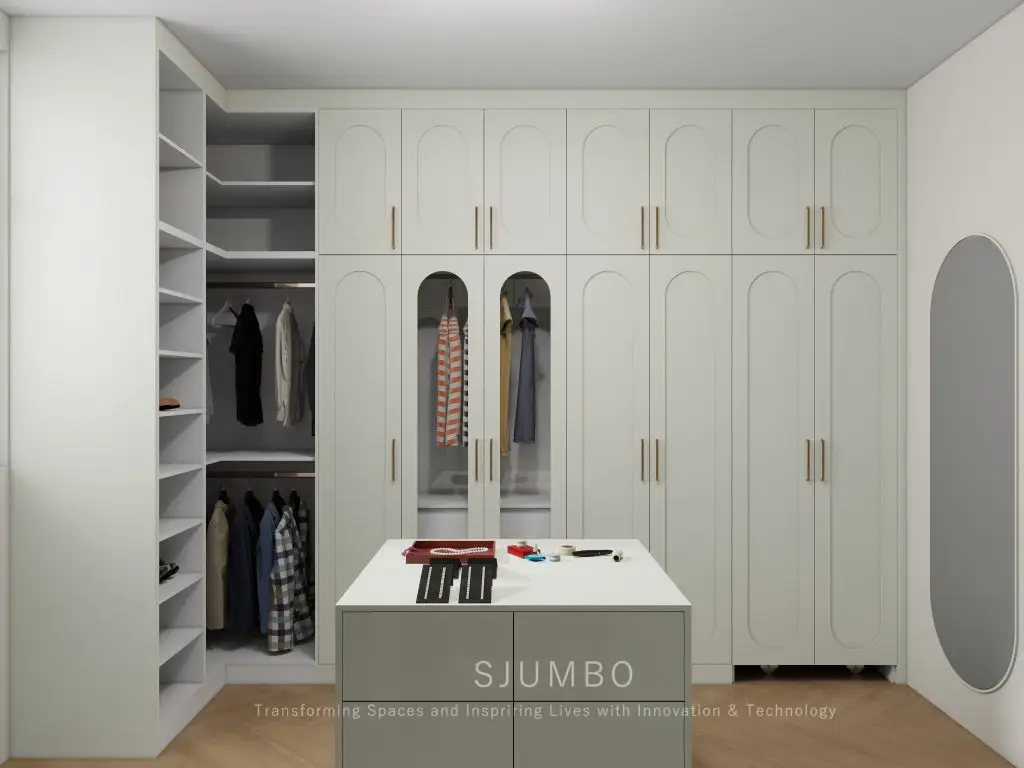
Premium paint materials are only the foundation of anti-yellowing performance; standardized and refined spraying craftsmanship is the core of long-term color stability. Most low-cost brands simplify construction procedures and adopt cheap auxiliary materials to cut costs, resulting in inevitable yellowing even with high-quality paint. With years of high-end customization experience, SJUMBO has developed a standardized non-yellowing polyurethane process system to block discoloration from source, construction and quality inspection.
Supported by this mature process, SJUMBO matte, high-gloss and soft-touch white finishes deliver silky texture, fingerprint resistance and scratch resistance, maintaining a flawless pure white look for years and fitting all high-end home decoration styles.
👉 Want customized long-lasting anti-yellow white cabinets? Book a free professional design consultation with SJUMBO and get your exclusive whole-home customization solution!
It depends on the cause of yellowing. Shallow yellow marks caused by surface grease and dust can be brightened with mild neutral detergent and soft cloth. However, over 90% of cabinet yellowing is irreversible internal paint oxidation. Cleaning can only cover the stain temporarily rather than restore the pure white finish. Repainting with professional anti-yellowing polyurethane is the only effective solution.
Confirm two key details to avoid inferior products. First, verify the curing agent type and choose aliphatic HDI hardeners instead of aromatic TDI ones. Second, confirm the dual-layer anti-yellow process with both base coat and top coat. You may also request official QUV aging test reports to check if the Delta E color difference value is below 1.5.
Daily care only provides auxiliary delaying effects and cannot eliminate oxidation fundamentally. You can install light-filtering curtains to block harsh UV rays, ventilate cabinets regularly and clean grease monthly to slow down aging. The only long-term effective solution is selecting high-grade aliphatic acrylic PU anti-yellow paint during customization.
Yes. SJUMBO optimizes paint formulas for high-light and high-humidity kitchen and balcony scenarios, increasing the proportion of UV stabilizers and protective ingredients and thickening dual anti-yellow coating layers. This customized formula adapts to long-term sunlight exposure and high wear environments, greatly extending the service life of pure white anti-yellowing white cabinets.
🏠 Want pure white, long-lasting and maintenance-free home cabinetry? SJUMBO one-stop whole-home customization provides professional anti-yellow solutions forwhite lacquer cabinets, wardrobes, balcony cabinets and interior doors. Supported by 16 years of craftsmanship and strict quality inspection, we help every customer eliminate cabinet yellowing troubles and balance timeless aesthetics and long-term durability.
In high-traffic commercial residential and hotel engine […]
Abstract: Aiming at the pain points of sagging full-hei […]
Melbourne wardrobe door warping is one of the most pers […]
When sourcing luxury beach hotel furniture supply solut […]
Related links:
About Us Company News Industry Updates Kitchen Cabinets Bathroom Suites Wardrobes Wall Systems Doors Windows & Balustrades SSL 100% Secure Transactions