
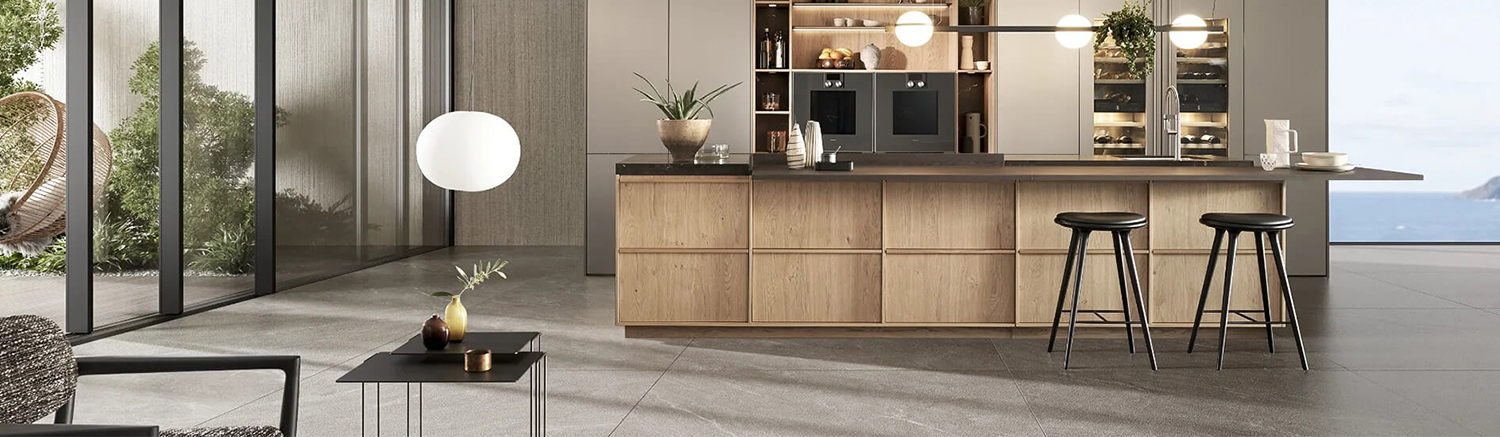
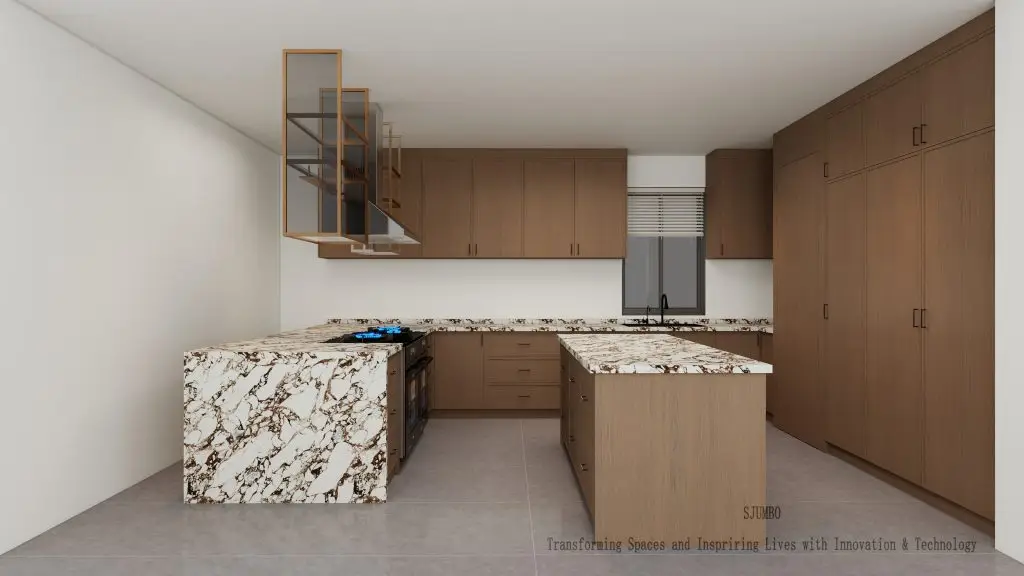
For whole-home customization supply chain providers, engineering contractors and design companies, cross-material color difference during door-wall-cabinet integration delivery is far more than a minor aesthetic defect. Visible color inconsistency after on-site installation directly downgrades design performance, and further leads to costly rework, delayed project handover, customer complaints, deduction penalties and damaged brand reputation. It has become one of the most risky and uncontrollable hidden flaws in high-end engineering furniture customization projects.
Most project teams face the same dilemma: color samples look perfectly unified in showrooms, while obvious tone separation appears under indoor lighting. To completely avoid delivery risks caused by the metamerism effect, it is necessary to abandon traditional visual color matching and adopt standardized, data-driven color control systems. With 16 years of manufacturing and engineering experience, SJUMBO creates high-standard delivery solutions targeting the material differences between wood door lacquer technology and melamine double-sided panels.
In fact, most engineering color errors are not caused by insufficient coloring skills, but by essential differences in production technology and optical properties between liquid paint and solid panels. Without standardized control, tone deviation under variable lighting is inevitable.
Wood door lacquer forms a protective film through cross-linking curing. The final effect is affected by substrate moisture content, paint film thickness, baking temperature and workshop cleanliness. Any minor parameter change will alter light absorption and diffuse reflection. Even with the same color formula, finished doors show subtle hue and gloss deviations and tend to present warm yellow tones under indoor warm light.
Melamine panels are mass-produced through resin impregnation and high-temperature high-pressure pressing. Hue, texture and gloss are fully fixed after production with no adjustable space. The flat and dense surface delivers sharp and regular light reflection, which is sensitive to cold spectrum and easily shows cyan undertones, forming visual contrast with warm lacquer doors.
Most color inspections only focus on hue consistency while ignoring gloss difference. Even with identical 5° matte parameters, lacquer surfaces deliver soft particle diffuse reflection, while melamine panels present rigid physical flat matte reflection. Different reflection mechanisms amplify tiny hue gaps under different lighting, resulting in obvious color separation that damages door wall cabinet integration overall consistency.
To avoid rework, delay and complaint risks caused by color difference, the core is to establish a implementable, quantifiable and replicable engineering color control system, replacing subjective experience with standardized processes to stabilize high-quality project delivery.
All whole-home customization engineering projects of SJUMBO follow the principle of “fixed benchmark and dynamic adaptation”. We take finalized melamine double-sided panels as the master sample, and adjust all wood door lacquer formulas and spraying processes to match the fixed panel tone. Unidirectional color matching eliminates chaotic double-sided adjustment and fundamentally reduces visual separation of spliced materials.
Color matching only under natural light cannot adapt to complex indoor engineering lighting. All sampling processes of SJUMBO adopt professional color matching light boxes with three international standard light sources: D65 natural daylight, TL84 indoor fluorescent light and A warm incandescent light. Only samples with consistent tone under all spectrums can pass inspection, solving the common industry failure of qualified showroom effect but defective on-site delivery.
SJUMBO applies high-precision spectrophotometers for full-band spectral detection, strictly controlling the engineering color difference value within ΔE < 1.0. This data-based system provides 100% predictable and quantifiable delivery results for engineering partners, reducing color difference caused rework, rectification and complaint risks by more than 98%, effectively saving project operation costs and ensuring delivery schedule and cooperative reputation.
Even with data-level zero color difference control, subtle optical gaps still exist between different materials. Scientific layout and edge finishing can further weaken color difference perception and maximize high-end project texture.
The table below shows core differences between two color matching modes, focusing on B-end core concerns including delivery standard, rework risk and project adaptability:
| Control Mode | Core Technical Standard | Multi-Light Visual Performance | ΔE Value | B-end Delivery Risk (Rework Rate) | Applicable Projects |
|---|---|---|---|---|---|
| Natural Light Visual Matching Only | Single natural light, subjective manual judgment | Obvious yellow-cyan color separation, severe visual disjointedness | 1.8 ~ 3.2 | Extremely high, easy to cause complaints, delay and contract deduction | Basic low-budget customization projects |
| SJUMBO Standardized Control | 3-light source box detection + spectrophotometer data quantification | Highly unified tone under all light sources, no distinguishable color difference | < 1.0 | Extremely low, greatly reduced rework and delivery risks | High-end whole-home, door-wall-cabinet integrated and engineering turnkey projects |
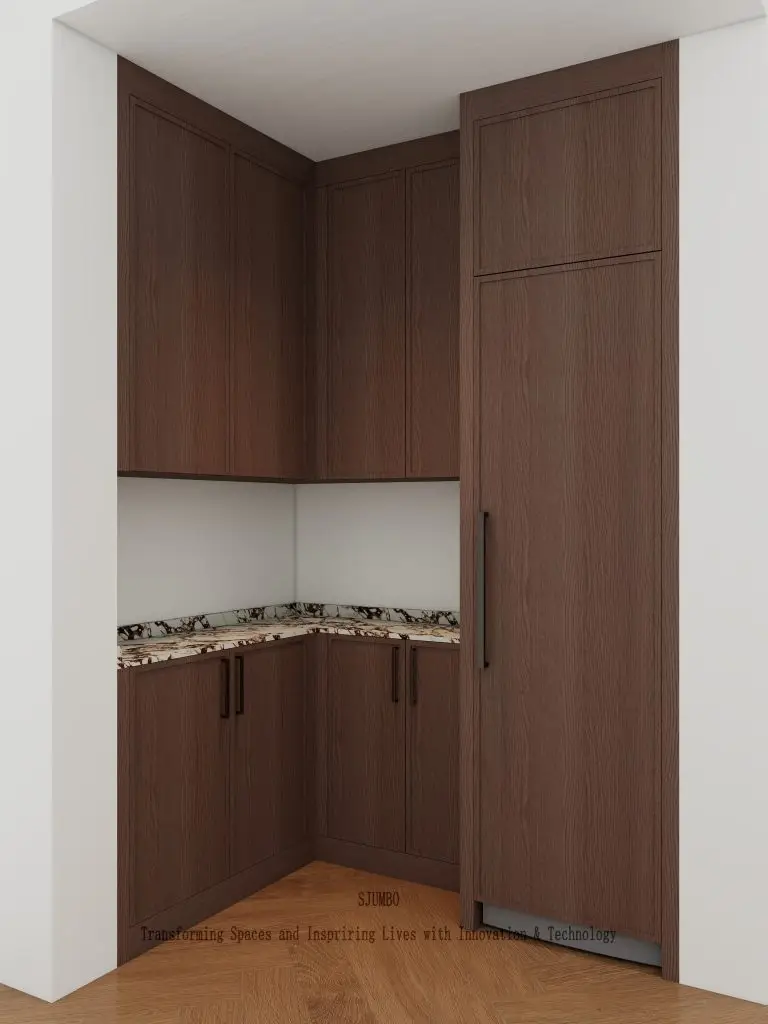
Due to different molecular structures and optical reflection logic, 100% spectral consistency cannot be achieved between liquid lacquer and solid melamine panels. However, SJUMBO’s standardized multi-light and data-driven control can compress color difference to an undetectable level for human eyes, realizing engineering-level zero color difference delivery that fully meets high-end turnkey project standards.
Showrooms adopt fixed standard light sources and static display environments without metamerism. Actual construction sites feature variable lighting angles and mixed spectrums, which amplify material optical differences and cause color deviation.
Melamine panels cannot be recolored on site. Local touch-up on lacquer doors will cause inconsistent paint thickness and gloss, leading to new texture defects. Advanced standardized sampling and data color control are the most effective ways to avoid engineering rework.
The key is to lock supply chain standards, fix benchmark color sources, implement full-condition multi-light detection and quantify color difference thresholds. As a mature whole-home customization supply chain provider, SJUMBO realizes integrated quality control for doors, walls and cabinets from sampling to delivery, completely solving engineering color difference risks.
🛠️ Are your projects also facing color difference and process connection problems in door-wall-cabinet delivery?
As a reliable long-term engineering partner providing one-stop whole-home customization solutions, SJUMBO has 16 years of mature engineering delivery and quality control experience. We provide free cross-material color sampling service, engineering technical document support and full-process color difference risk control for design studios, decoration enterprises and real estate engineering clients, ensuring zero-rework and high-reputation project delivery.
Contact SJUMBO now to get customized engineering color solutions and professional technical support.
Every architectural and contracting team has encountere […]
In the design of modern high-end villas, curved wood fl […]
In humid coastal climates where relative humidity consi […]
As the core of home storage, the design of the custom w […]
Related links:
About Us Company News Industry Updates Kitchen Cabinets Bathroom Suites Wardrobes Wall Systems Doors Windows & Balustrades SSL 100% Secure Transactions