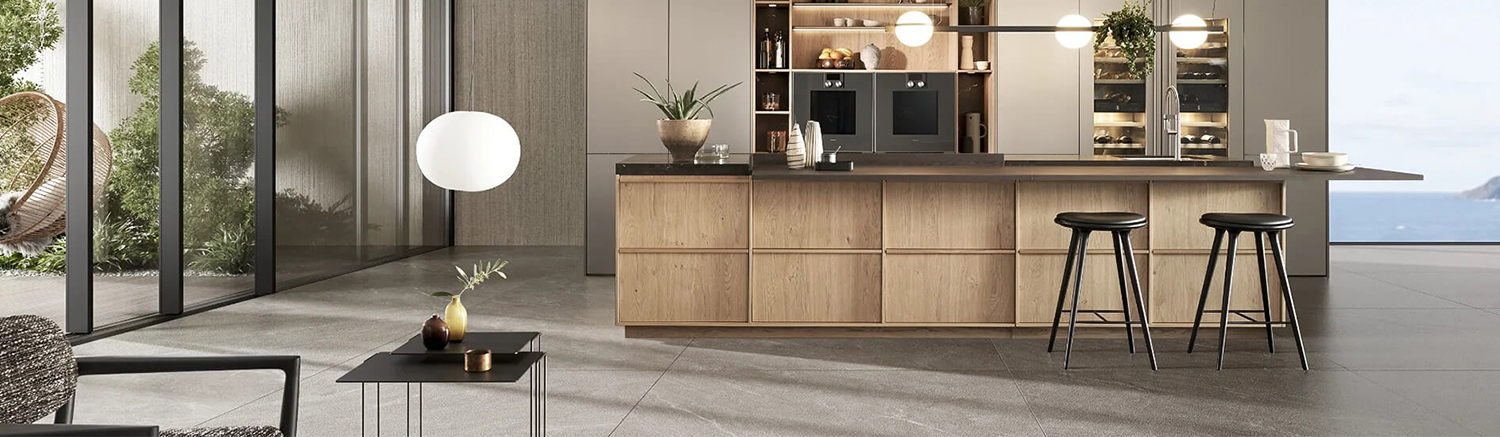
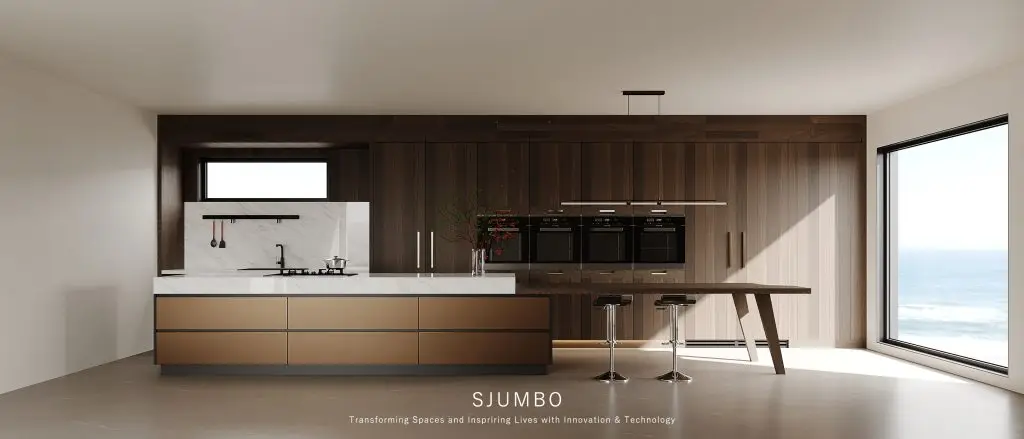
Every architectural and contracting team has encountered this awkward and costly problem. You deliver a high-end bespoke villa kitchen with premium finishes, precise joinery and perfect final acceptance, yet underfloor heating kitchen cabinets start failing once winter heating activates. Uneven door gaps, jammed drawers and cracked wood panels keep recurring despite repeated hinge adjustments and on-site repairs. Most designers mistake this issue for poor installation or low-quality hardware. In fact, it is a hidden engineering pitfall: most luxury custom cabinets are not structurally optimized for radiant heating environments. From a first-hand construction avoidance perspective, this article reveals why high-end heated kitchen joinery frequently fails, interprets core deformation principles with measured data, and shares replicable villa kitchen underfloor heating anti-warping solutions compliant with Eurocode 5 standards, helping professional teams avoid rework, client complaints and reputational damage.
With 16 years of experience specializing in luxury villa custom furniture and remedial joinery projects, we have summarized a widespread industry shortcut. All professional cabinet manufacturers fully understand that long-term radiant heat will break the internal structural balance of wooden joinery and cause irreversible deformation. However, to reduce production costs and simplify manufacturing procedures, most suppliers still deliver standard ordinary cabinetry for high-end heated villa projects, transferring all after-sales risks, compensation losses and reputational pressure to designers and general contractors.
Most so-called luxury custom kitchens still adopt conventional MDF, particleboard and ordinary solid wood substrates with fully sealed kickboard structures, without any thermal break design, heat dissipation optimization or precise moisture calibration. Manufacturers only promote aesthetic design, storage functions and surface craftsmanship on marketing materials, deliberately ignoring two core engineering indicators that determine long-term cabinet durability: Equilibrium Moisture Content (EMC) adaptation and Eurocode 5 thermal insulation engineering standards.
These cabinets look flawless upon handover and pass standard inspections, but they are only short-term qualified products rather than durable engineering solutions. Continuous radiant heat destroys the internal wood structure, causing permanent warping, delamination, cracking and hardware misalignment. Designers and contractors bear all subsequent losses while manufacturers evade after-sales liabilities completely — this is the most concealed and costly hidden danger in luxury villa kitchen customization.
SJUMBO 2026 Field Engineer Official Warning: Verified by thousands of on-site infrared temperature and humidity tests, we confirm a fixed failure threshold. For unoptimized fully enclosed base cabinets, when the bottom cavity temperature exceeds 38°C and indoor humidity drops below 35%, custom villa kitchen joinery enters a formal deformation countdown. Warping, edge peeling and drawer jamming will inevitably occur within 2 to 3 months of continuous heating operation.
Cabinet warping is never a simple material quality issue. Thermal deformation of wooden kitchen cabinets under radiant heating is a physical structural imbalance caused by the superposition of temperature, humidity and structural defects. Over 90% of heated kitchen failures stem from three fundamental causes:
To solve the universal industry pain point of how to prevent kitchen cabinet warping over underfloor heating, SJUMBO abandons template-based mass-production customization processes. Based on 16 years of high-end villa project experience, we have established a Eurocode 5 compliant three-dimensional anti-deformation system, covering substrate upgrading, structural thermal break and precise climate-adaptive moisture calibration, achieving long-term zero-deformation and zero-maintenance stability for heated kitchen cabinetry.
We completely eliminate ordinary room-temperature substrates including particleboard, MDF and conventional solid wood. All structural components of villa kitchen cabinets and island benches adopt professional European standard villa kitchen plywood. The cross-laminated veneer structure undergoes high-temperature steaming, multi-round stress relief and constant-temperature shaping, eliminating inherent internal panel stress from the source. With an ultra-low thermal expansion coefficient, it actively offsets asymmetric thermal shrinkage and stretching caused by radiant heat, delivering excellent high-temperature resistance, moisture-proof performance and aging resistance for long-term underfloor heating working conditions.
Enclosed heat accumulation is the core cause of thermal deformation. We completely reform traditional sealed kickboard structures and adopt embedded invisible convection grooves to realize natural passive heat dissipation. Meanwhile, high-density flame-retardant aluminum foil thermal shields are installed between cabinet bases and floors to build dual physical thermal barriers, blocking over 80% of upward radiant heat transfer. All optimized structures are fully concealed, preserving the minimalist high-end kitchen aesthetics while ensuring structural engineering stability.
Unified factory moisture calibration cannot adapt to regional differences in climate humidity, heating temperature and operation cycles. Equipped with fully automatic intelligent drying kilns, we customize panel moisture content according to local annual climate data and winter heating parameters, strictly calibrating substrates within the 8%–10% Eurocode 5 golden EMC range. This ensures cabinetry quickly adapts to on-site temperature and humidity after installation, fundamentally eliminating deformation risks from thermal and humidity fluctuations and fully meeting Eurocode 5 engineering acceptance standards.
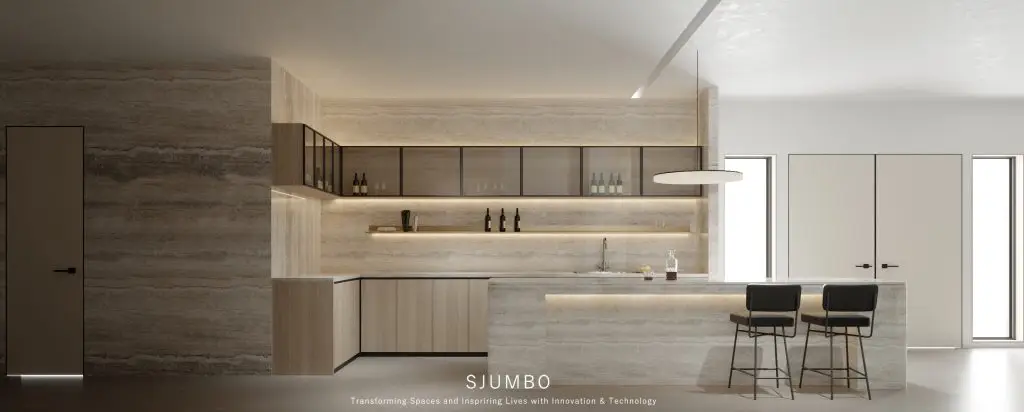
Sorted from years of on-site villa test data, the following table intuitively presents the essential performance gaps between conventional high-end customization and professional heating-adapted cabinet solutions, providing authoritative engineering references for designers and contractors:
| Testing Dimension | Conventional Luxury Custom Cabinets | SJUMBO Euro-Spec Heating-Resistant Cabinets |
| Bottom Steady Temperature | 38–42°C, severe enclosed heat accumulation | 25–28°C, efficient passive heat convection |
| 3-Year Deformation Failure Rate | 92%, frequent door misalignment & drawer jamming | Near-zero deformation after multi-season heating cycles |
| EMC Climate Adaptability | Fixed factory moisture value, incompatible with heating EMC environment | Zonal precise calibration matching local Eurocode standards |
| Long-Term Thermal Durability | Poor, prone to delamination, cracking and odor release | Excellent, long-term heat resistance and anti-aging performance |
| Engineering Compliance Grade | Basic environmental certification only, no thermal engineering standard | Dual compliance with Eurocode 5 & E1/F4 international standards |
Compiled from hundreds of high-end heated villa customization projects, these high-frequency questions solve core construction pain points and avoid project risks:
Q1: How to retain natural wood texture without warping in underfloor heating kitchens?
A: Pure solid wood substrates are not recommended for any heated kitchen space due to extreme temperature and humidity sensitivity, which inevitably causes dry shrinkage, cracking and warping under cyclic radiant heating. To achieve premium wood aesthetics and long-term structural stability, the optimal solution for wood style kitchen cabinets with underfloor heating is adopting Euro-spec multi-layer plywood as the structural base with natural wood veneer finishing, perfectly restoring solid wood texture while eliminating deformation risks at the substrate level.
Q2: Will concealed ventilation and thermal break structures accumulate grease and increase maintenance costs?
A: Absolutely not. Our narrow concealed ventilation grooves are scientifically sized for daily cleaning tools, allowing convenient wiping and dust removal without dead corners. The anti-fouling coated aluminum foil thermal shield resists oil stains and water marks without special maintenance required. Compared with cabinet rework, client compensation and reputational losses, this optimized structure brings nearly zero long-term operation pressure.
Q3: Is there a permanent solution for slightly deformed cabinets in heating kitchens?
A: Hinge adjustment only relieves superficial door misalignment temporarily and cannot repair unbalanced internal wood stress, leading to worsening deformation in the next heating season. For high-end villa projects, targeted structural optimization or full replacement of heating-specific cabinet systems is the most reliable solution to avoid secondary complaints and reputational damage. SJUMBO provides full-process services including on-site inspection, condition diagnosis, personalized solution design and professional installation, supported by a 3-year comprehensive warranty.
Q4: Do heating kitchen cabinet processes require regional differentiated adjustment?
A: Differentiated customization is mandatory. Obvious differences in regional temperature, humidity and heating cycles require targeted adjustment of substrate moisture content, thermal layer thickness and ventilation parameters. Template universal processes can never meet the refined engineering standards of luxury villa projects, which marks the core difference between professional engineered customization and mass-produced cabinetry.
Many well-designed, high-budget luxury villa projects fail due to negligible but fatal thermal deformation details. This is never an aesthetic flaw, but an avoidable engineering accident caused by insufficient heated-condition construction experience. With 16 years of full-home custom engineering experience, SJUMBO focuses on refined optimization of underfloor heating kitchen cabinets, providing exclusive engineered solutions for different regional working conditions and helping professional design and contracting teams stabilize project quality and industry reputation.
Are you currently undertaking high-end villa and luxury residence projects equipped with underfloor heating systems? Worried about long-term wood warping and cracking issues damaging project delivery quality and team reputation? Want to avoid all hidden engineering risks of heated kitchen cabinetry and obtain Eurocode 5 standardized construction parameters tailored for local working conditions? Feel free to contact SJUMBO for free professional condition evaluation, customized technical solutions and authentic project case references. We provide exclusive technical support for design and engineering teams, ensuring zero-failure and long-lasting delivery of all high-end heated kitchen projects.
When delivering multi-family architectural projects, wh […]
Company Profile: A Leading One-Stop Provider Since 2009 […]
In high-traffic commercial residential and hotel engine […]
Every architectural and contracting team has encountere […]
Related links:
About Us Company News Industry Updates Kitchen Cabinets Bathroom Suites Wardrobes Wall Systems Doors Windows & Balustrades SSL 100% Secure Transactions