
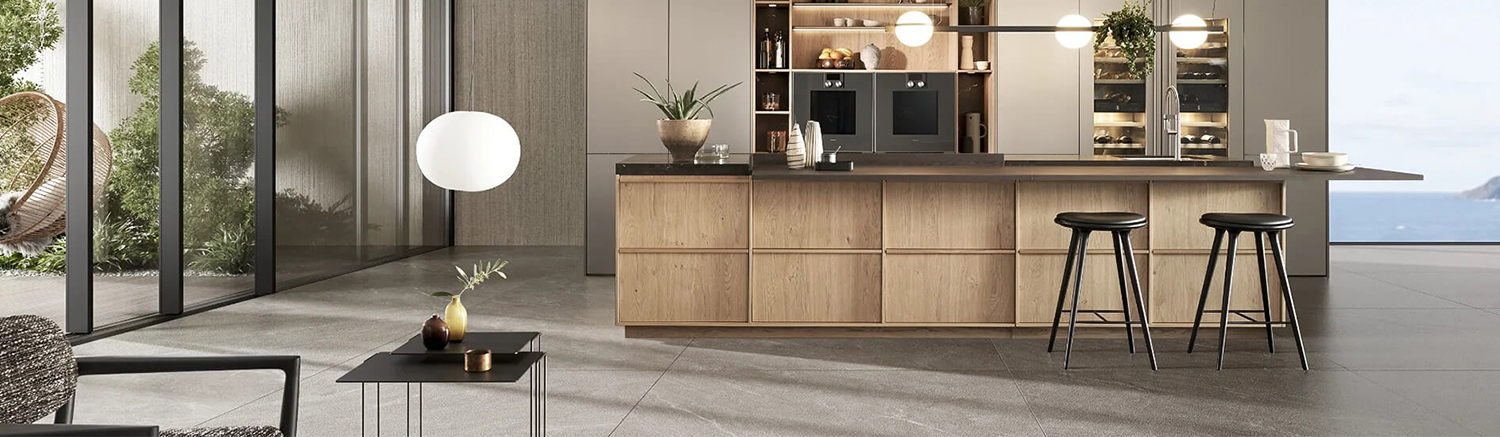
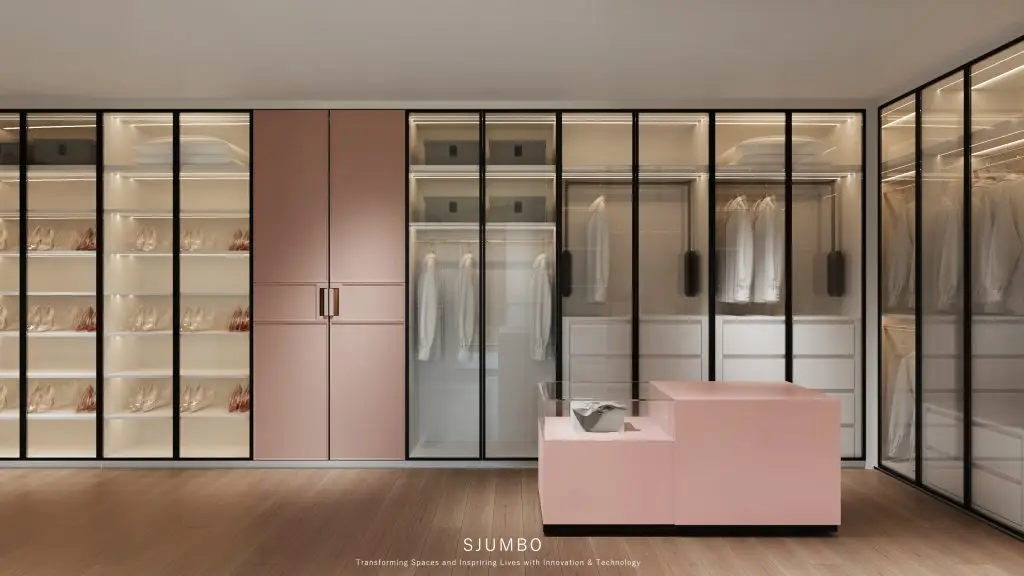
Custom joinery solutions for coastal luxury villas require strict compliance with tropical climate engineering standards, as high humidity, coastal salt spray, and endemic termite infestations pose severe long-term threats to interior millwork. For villa developers, general contractors, and commercial interior designers, improper cabinetry material specifications consistently lead to post-handover warranty claims, repeated on-site repairs, and inflated project operation costs. Selecting qualified moisture-resistant wardrobe systems has become a core standard procedure in modern tropical villa engineering, directly affecting project pass rates, after-sales workload, and long-term asset value. With 16 years of specialized experience in global residential and hospitality joinery supply, SJUMBO has optimized standardized wardrobe systems tailored for high-humidity coastal tropical environments, solving common durability pain points for large-scale villa construction projects.
In tropical commercial construction projects, project stakeholders often face a critical specification dilemma: traditional wood-based cabinetry delivers classic architectural texture but fails long-term climate durability, while full metal structural systems provide stable performance yet lack high-end residential aesthetic compatibility. Professional engineering teams now prioritize material performance data, industry certification compliance, logistics efficiency, and post-installation maintenance costs rather than superficial styling. A detailed technical comparison of all-wood and aluminum-frame wardrobe systems can effectively support contractors in formulating accurate, cost-effective, and low-risk joinery specifications.
Coastal and tropical building environments present four non-negotiable structural challenges for custom wardrobe millwork, which are the primary causes of project after-sales disputes and asset depreciation:
Based on SJUMBO’s 16-year global project database covering coastal villa and resort joinery projects, the following standardized technical comparison strictly complies with ASTM and AS/NZS tropical building component standards. All test data is derived from third-party certified environmental aging tests and on-site project tracking statistics, accurately reflecting the practical performance of different wardrobe systems in high-humidity coastal scenarios:
| Engineering Evaluation Dimension | Traditional Wood Wardrobes (MDF / Standard Plywood) | Engineered 6063-T5 Aluminum Frame Wardrobe Systems | B2B Project Impact & ROI |
|---|---|---|---|
| Moisture Swelling Rate (85% RH Constant Humidity) | Swelling rate exceeds 10%; edge band delamination occurs within 12 months | Zero hygroscopic expansion; 100% dimensional stability per ASTM D1037 standard | Eliminates post-installation alignment correction and rework labor costs |
| Termite & Pest Resistance | Cellulose-based substrate attracts tropical pests; chemical protection fails in 3–5 years | Inorganic metal structure, 100% termite and borer immune, compliant with tropical building pest codes | Cancels recurring property pest control budgets and warranty claims |
| Salt Spray Corrosion Resistance | Surface coating blistering and discoloration within 18 months in coastal areas | 6063-T5 grade aluminum with PVDF fluorocarbon coating, passes 1000-hour neutral salt spray test | Meets oceanfront resort durability requirements, extends project service life |
| Full-Height Door Structural Stability (3m) | Persistent warping and seam offset due to indoor-outdoor humidity differentials | High-rigidity extruded aluminum profile, zero structural deflection under long-term temperature and humidity cycling | Maintains consistent architectural aesthetics, reduces post-delivery adjustment work |
| Logistics & Flat-Pack Shipping Efficiency | Integral assembly structure, large shipping volume, 15–20% transit damage rate, high ocean freight costs | Complete KD flat-pack modular design, 40% reduced shipping volume, 98% transit integrity rate | Significantly cuts international logistics expenses and on-site damage loss |
| On-Site Installation Cycle | Requires professional on-site carpentry trimming, 2–3 working days per unit | Pre-engineered modular assembly, standardized docking structure, 4–6 hours rapid installation per unit | Shortens overall project construction period, improves handover efficiency |
| Long-Term Maintenance Cycle | Annual dehumidification, repainting and pest treatment required | Smooth non-porous surface, no special maintenance needed, 10+ years maintenance-free warranty | Minimizes property management long-term operational costs |
Most early-stage project specification errors stem from applying conventional residential wood cabinet standards to tropical coastal commercial projects. Ordinary E1-grade plywood and P2-grade MDF lack professional tropical climate adaptation design, failing to meet V313 anti-moisture test standards required for high-humidity building components.
The core failure mechanism lies in unbalanced structural humidity stress. Tropical villa envelopes feature large-area glass curtain walls and fully open ventilation systems, creating a permanent humidity gap between indoor air-conditioned spaces and outdoor natural environments. Full-height wood panels absorb and release moisture repeatedly with seasonal climate changes, leading to material fatigue and irreversible deformation. Additionally, tropical concrete building walls retain high ground moisture year-round, and uninsulated wood back panels continuously absorb capillary water, accelerating mildew and structural decay.
In contrast, professional high-humidity wardrobe hardware matched 6063-T5 aluminum frame systems completely avoid organic material defects. The alloy structure features zero water absorption and stable physical properties, while matched 4mm/5mm SGS-certified tempered glass panels provide excellent dimensional stability. All structural accessories adopt stainless steel anti-corrosion hardware customized for coastal climates, ensuring long-term coordinated and stable operation of the entire cabinet system.
For high-end commercial projects that pursue natural wood architectural texture while requiring tropical climate durability, pure aluminum or pure wood systems cannot meet dual aesthetic and engineering requirements. Based on years of global hospitality and multi-family residential project delivery experience, SJUMBO launches a professional hybrid joinery system, which has become the mainstream specification choice for high-standard coastal villa whole-house joinery projects.
This engineered solution adopts a clear structural division of labor: the load-bearing framework uses fully anodized 6063-T5 aluminum extrusions as the structural shield, completely isolating wall capillary moisture and outdoor humid salt spray, undertaking all anti-deformation, anti-corrosion and anti-pest functional responsibilities. The interior decorative and storage components adopt marine-grade V313 waterproof plywood and high-pressure laminate (HPL) panels, with zero-joint laser edge banding technology to block moisture penetration thoroughly.
This hybrid engineering design enables contractors to deliver the high-end warm texture of custom wood millwork while obtaining a 10+ year maintenance-free warranty. It effectively reduces project after-sales complaint rates, unifies on-site installation standards, and greatly improves the comprehensive cost performance of large-scale batch procurement projects, perfectly fitting the risingglass aluminum door wardrobe trend in modern tropical luxury architecture.
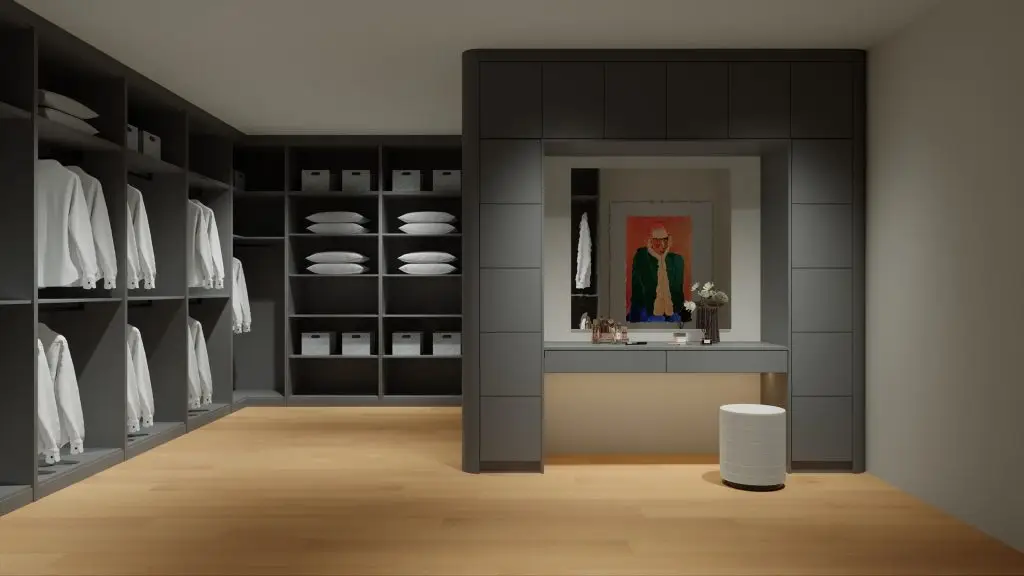
Collected from SJUMBO’s global engineering consultation and after-sales data, the following high-frequency questions accurately address the core concerns of developers, contractors and design teams in tropical villa customization projects:
Q1: Can high-grade treated wood wardrobes meet long-term usage standards in tropical coastal projects?
No stable long-term guarantee can be provided. Even E0/E1 high-grade environmental-friendly wood substrates are organic porous materials that cannot pass the V313 long-term humidity resistance test. Chemical anti-mold and anti-pest treatments are degradable under continuous high temperature and salt spray environments. For commercial projects with 5+ year warranty requirements, pure wood cabinetry will inevitably produce mildew, deformation and pest damage, triggering batch warranty claims.
Q2: What aluminum treatment process is qualified for oceanfront villa joinery projects?
Only 6063-T5 architectural grade aluminum with dual anodization + PVDF fluorocarbon finishing can meet coastal engineering standards. Ordinary powder-coated aluminum profiles cannot resist salt spray electrochemical corrosion. SJUMBO’s full set of aluminum frame components pass 1000-hour neutral salt spray testing and comply with ASTM coastal building material specifications, suitable for long-term use in beachfront resorts and luxury villa clusters.
Q3: Why do mainstream tropical luxury villa projects adopt modular aluminum-glass wardrobe systems?
Beyond climate durability advantages, this system solves multiple pain points of commercial projects. Its KD flat-pack modular structure reduces shipping volume and transit damage risks, greatly lowering international logistics costs. Standardized prefabricated components shorten on-site installation cycles, unify project delivery standards, and minimize manual construction errors. Meanwhile, the minimalist transparent design matches modern tropical biophilic architectural styles, improving project grade and market competitiveness.
As a professional manufacturer with 16 years of global custom furniture engineering experience, SJUMBO provides standardized, certificated moisture-resistant wardrobe systems and full-house joinery solutions for tropical and coastal high-end construction projects. We support batch customized engineering specifications, third-party certification testing, modular packaging and global one-stop supply chain services, helping project teams reduce after-sales risks, shorten construction cycles and maximize project long-term ROI.
Most people engaged in high-end villa renovation have e […]
The Nightmare Scenario: “Just two seasons after h […]
In the logistics of large-scale whole-house customized […]
TL;DR — What to specify Built-in ovens and steamers hav […]
Related links:
About Us Company News Industry Updates Kitchen Cabinets Bathroom Suites Wardrobes Wall Systems Doors Windows & Balustrades SSL 100% Secure Transactions