
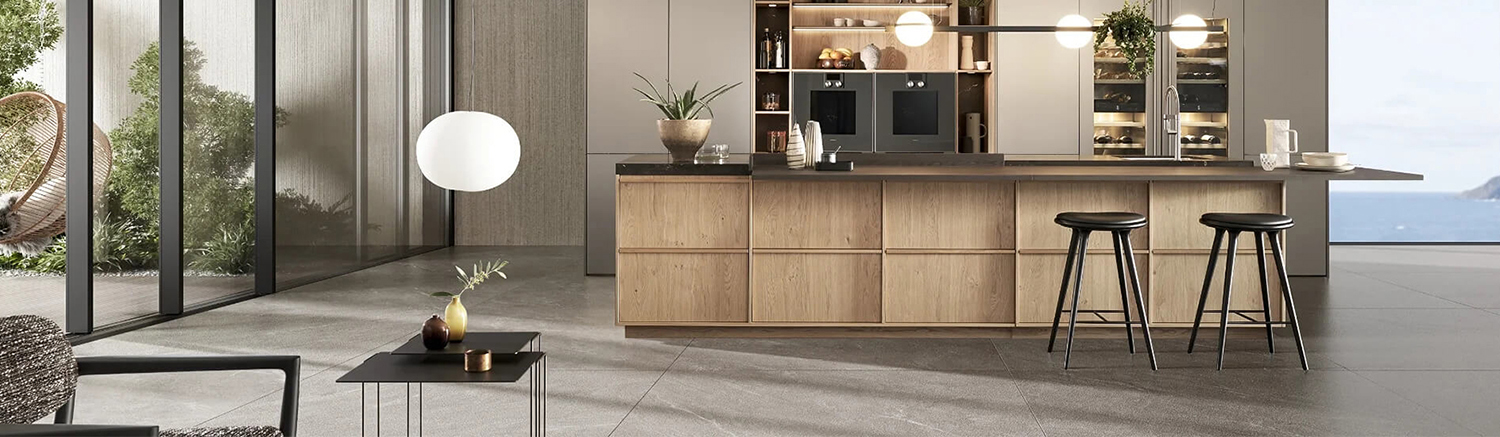
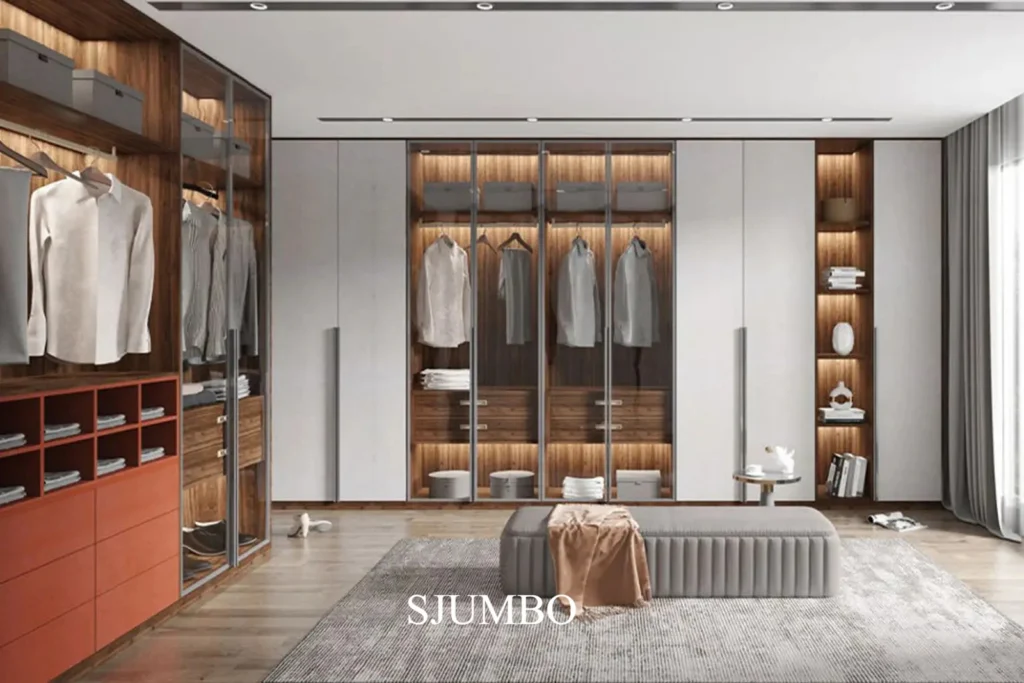
When a boutique hotel or commercial property project completes handover, all custom cabinetry and wall paneling look equally pristine. But six months into operation, a sharp contrast emerges:
Guestroom mini-bar cabinets show hazy white patches after frequent alcohol wipes; balcony cabinets and window-side storage units yellow under sunlight, making re-order matching almost impossible; and dark-toned wardrobe doors end up covered in oily fingerprints that housekeeping can barely wipe away.
In full-scope commercial cabinet customization, surface aesthetics are merely the baseline. The real test lies in weatherability, wear resistance, and long-term operating costs. From a one-stop whole-space customization perspective, this guide breaks down the physical performance of PET, Lacquer (Painted), Melamine (MFC), and CPL cabinet finishes to help you make smarter procurement decisions.
Most project managers judge cabinet samples based solely on tactile feel and edge banding, overlooking the extreme wear and tear commercial cabinets endure every day:
Based on real-world commercial performance and laboratory testing, here is how the four major cabinet finishes stack up:
| Feature / Metric | PET Cabinet Finish | Lacquer / Painted Cabinet Finish | Melamine (MFC) Cabinet Finish | CPL Cabinet Finish |
|---|---|---|---|---|
| Cabinet Anti-Fingerprint | Excellent (Oleophobic layer; smudges wipe off effortlessly) | Poor to Fair (Gloss shows marks; matte absorbs oils) | Moderate (Relies on surface grain to hide smudges) | Excellent (EB-cured / micro-embossed; ultra-easy to clean) |
| UV Resistance (ISO 105-B02) | Grade 4–5 (Highly stable; minimal risk of yellowing) | Grade 3–4 (White and light shades yellow over time) | Grade 4–5 (Stable resin layer; high light fastness) | Grade 5 (Top-tier UV fastness; zero visible fading) |
| Surface Scratch Resistance | 2H – 3H (Flexible surface; resists daily friction) | 1H – 2H (Softer finish; prone to chipping on impact) | 3H – 4H (Hard resin layer; resists sharp scratches) | ≥ 4H (Ultra-dense wear layer; high impact resistance) |
| Disinfectant & Alcohol Tolerance | High (Withstands high-concentration alcohol wipes) | Low to Fair (Harsh solvents degrade paint film) | High (Handles daily room sanitizing solutions) | Extreme (Resists hospital-grade disinfectants) |
| Overall Cost & Production Efficiency | High (Standardized pressing; reliable lead times) | Low (Multi-coat curing; long lead times, higher cost) | Extremely High (First choice for bulk budget management) | Mid to High (Premium durability for high-wear areas) |
The core value of one-stop whole-space customization is putting the right material in the right place—maximizing lifespan while controlling total project cost.
Q1: How should procurement teams decide between PET and CPL for hotel custom cabinetry?
Q2: Why are project managers moving away from widespread lacquer cabinet doors?
Q3: How does a one-stop whole-space customization provider eliminate batch color differences?
Procuring durable commercial cabinetry requires far more than selecting panel samples—it demands turnkey execution, from shop drawing refinement and core moisture control to precision edge-banding and on-site assembly.
At SJUMBO, we specialize in one-stop full-scope custom cabinetry and whole-space commercial solutions for global hotel brands and property developments. Backed by dedicated commercial cabinetry production lines, we deliver tailored material sampling, UV test reports, and complete project manufacturing—ensuring every commercial space retains its premium quality for years to come.
In the overall planning of Multi-family Housing Project […]
A bathroom mirror cabinets built for multi-family resid […]
In current high-end home decoration, the minimalist win […]
In high-traffic commercial residential and hotel engine […]
Related links:
About Us Company News Industry Updates Kitchen Cabinets Bathroom Suites Wardrobes Wall Systems Doors Windows & Balustrades SSL 100% Secure Transactions