In whole-house customization, sintered stone thickness is the key to determining the durability and implementation effect of countertops, especially custom sintered stone for kitchen islands and sintered stone vanity top selection, the choice of sintered stone thickness for kitchen islands and sintered stone vanity topdurability directly affects the long-term use experience of the space. With 16 years of deep cultivation in the whole-house customization field, SJUMBO has accumulated a wealth of practical implementation experience from large-space sintered stone customization to refined home countertop creation. Today, we will thoroughly explain the selection details of 12mm and 9mm sintered stone combined with actual cases.
The core physical properties of high-quality sintered stone in the market have stabilized in 2026, with a Mohs hardness of 6-7. It is difficult to leave marks under daily knife scratches and hard object collisions. The water absorption rate is below 0.03%, completely preventing the penetration of oil and water stains. The flexural strength can reach 1200-1500N, and thermal stability of sintered stone is excellent, without cracking or deformation under rapid cooling and heating conditions. Frankly speaking, sintered stone of different thicknesses varies greatly in stress structure, processing technology and scene adaptability, which is also the core consideration in our customization plans.
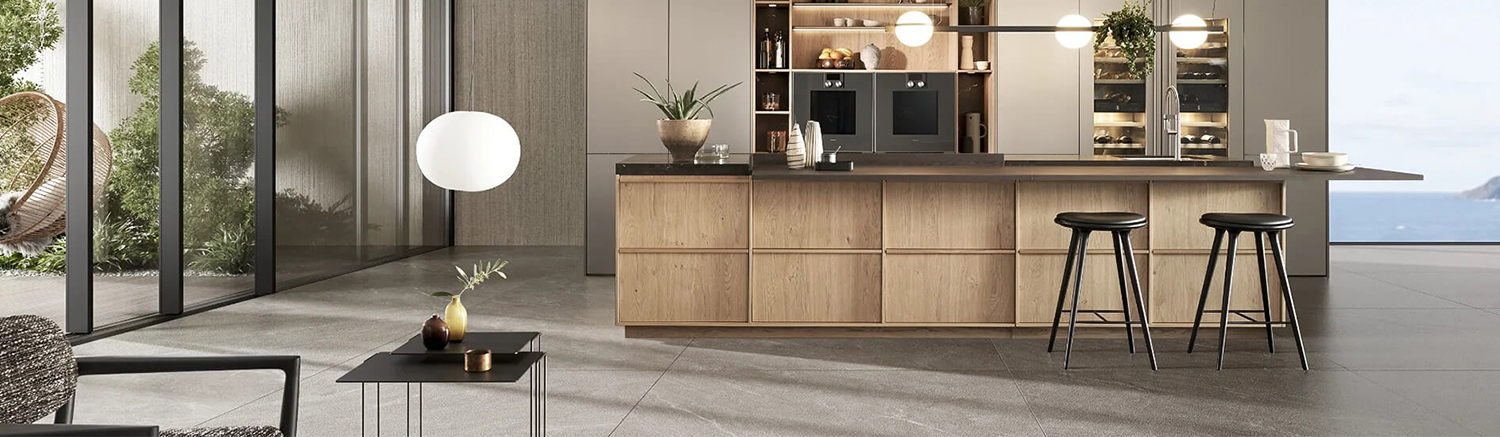
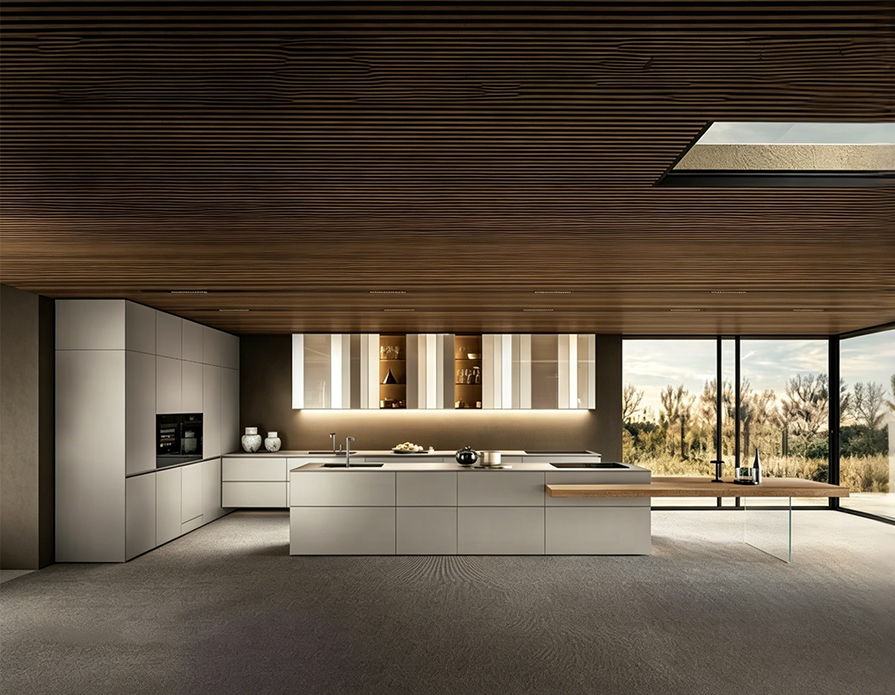
12mm sintered stone is the benchmark selection for sintered stone for kitchen islands, and also the preferred sintered stone thickness for home kitchen islands. It has excellent drop and impact resistance, easily carrying heavy kitchen utensils and direct food cutting on the countertop daily. Relying on 45-degree angle splicing technology of sintered stone, it can also realize seamless splicing technology of sintered stone, with invisible gaps after splicing and an integrated overall texture. Whether it is a large island in a large-sized open kitchen, a wall-mounted countertop requiring load-bearing, or a multi-functional operation island, 12mm sintered stone can adapt to high-intensity and high-frequency use needs. Its solid thickness can resist loss caused by long-term use, with rare deformation or edge collapse.
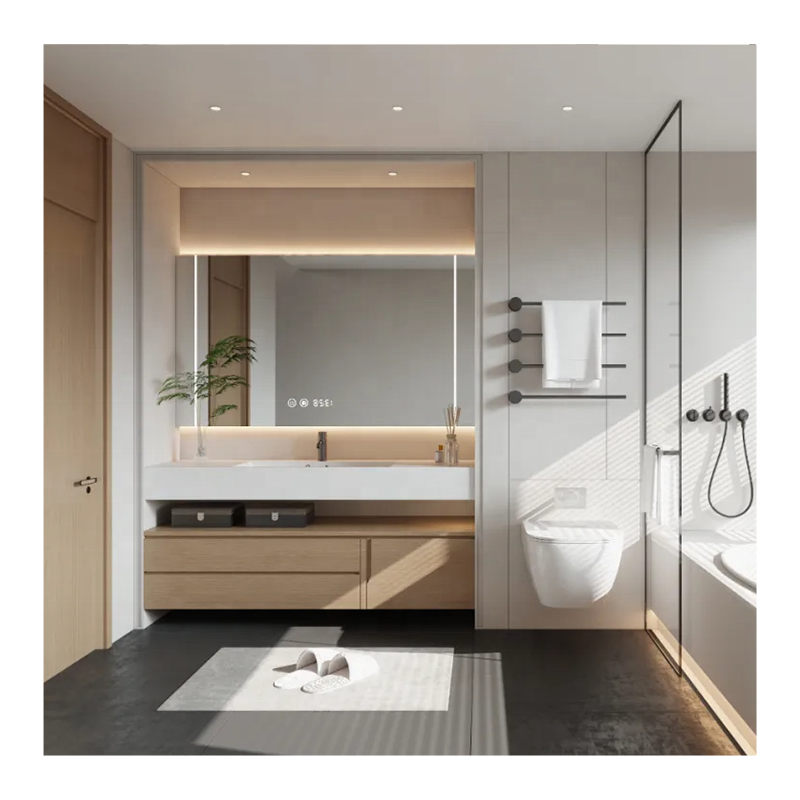
9mm sintered stone is the preferred choice for lightweight customization, especially suitable for thin sintered stone vanity tops. It can effectively reduce the load-bearing pressure of cabinets, is more convenient for installation and construction, and has lower loss in processing and cutting. Perhaps you do not know that this thickness of sintered stone has extremely strong adaptability, and can perfectly match scenes such as sintered stone countertops for floating bathroom vanities, cabinet back wall sintered stone, and sintered stone panels for cabinet doors. Such spaces have low requirements for countertop load-bearing. The lightweight sintered stone can not only retain high-end texture but also avoid cabinet deformation caused by excessive dead weight, and the overall adaptation scheme is more flexible. It is also an ideal choice for sintered stone vanity tops in small apartments.
| Comparison Dimension | 12mm Sintered Stone (Heavy Duty) | 9mm Sintered Stone (Standard) | Pro Tip / SJUMBO Advice |
|---|---|---|---|
| Load-bearing Capacity | Extremely strong, supports heavy-duty cutting | Moderate, focusing on lightweight | 12mm is a must for kitchen islands involving cutting operations |
| Dead Weight Pressure | Approx. 30kg/m² | Approx. 22kg/m² | For floating cabinets, strict control of dead weight is required, 9mm is preferred |
| Flexural Strength | 1400-1500N | 1200-1300N | 12mm is preferred for high-frequency and heavy-load scenarios, 9mm is sufficient for light-load scenarios |
| Processing Difficulty | Moderate, supports complex chamfering and modeling | Simple, with higher cutting and splicing efficiency | Choose 12mm for complex shapes, 9mm is more cost-effective for minimalist styles |
| Edge Technology | Supports 45-degree angle splicing technology of sintered stone and wide-edge modeling | Adapted to simple straight-edge and thin-edge refined technology | Choose 12mm seamless splicing for overall countertop texture, 9mm straight edge for minimalist design |
| Application Scenarios | Large kitchen islands, load-bearing wall-mounted countertops | Vanity countertops, cabinet panels, back wall panels | Select according to space function positioning, SJUMBO can provide scenario-based customization advice |
| Base Material Matching | Can be used independently, large sizes need reinforcement | Must be matched with honeycomb aluminum/backing plate | Structural stability is the premise of preventing cracking, base material matching should follow SJUMBO’s professional advice |
| Long-term Durability | Suitable for high-frequency and high-intensity use | Suitable for low-frequency and light-use scenarios | Choose 12mm for high-frequency household operations, 9mm for secondary renovation or light-load scenarios |
Many people fall into the misunderstanding that “the thicker the sintered stone, the better the quality”. It must be clearly pointed out here:Thickness ≠ Durability. In fact, the durability of countertops lies in structural support, not thickness itself. Take sintered stone countertops for floating bathroom vanities as an example. In this scenario, the Static Load of a 12mm slab can significantly increase the risk of wall anchor failure, which is not conducive to long-term stability. On the contrary, a reinforced 9mm slab can have a better Strength-to-Weight Ratio, and its stability is far superior to that of an unreinforced 12mm slab, which is also a key skill for sintered stone vanity top selection. Even for large-sized kitchen islands, 12mm sintered stone needs to be matched with reinforced base materials to truly ensure the safety of long-term use — this is practical experience summarized by SJUMBO through thousands of landing cases over 16 years.
When selecting high-quality sintered stone, these details cannot be ignored: check the overall texture of sintered stone, high-quality sintered stone has consistent internal and external colors; verify the water absorption rate and flexural strength parameters of official tests to ensure they meet high-quality standards; check the processed edges, qualified technology means no edge collapse or burrs; match appropriate reinforced base materials according to customized scenarios to avoid potential safety hazards in the later stage. With 16 years of whole-house customization experience, SJUMBO can provide one-stop services including seamless splicing technology of sintered stone, thickness customization and base material matching according to actual needs, accurately matching the optimal scheme for custom sintered stone for kitchen islands and sintered stone vanity top selection, and controlling the whole process from material selection to installation to avoid rework caused by wrong thickness selection.

Q: Can 9mm sintered stone be used for kitchen countertops?
A: Yes, it can, but 12mm is more suitable for kitchen countertops with high-frequency operations. If 9mm sintered stone is used for kitchen countertops, it must be fully covered with a honeycomb aluminum backing plate to enhance load-bearing capacity and stability, avoiding deformation and cracking during long-term use. SJUMBO can provide professional backing plate matching and installation guidance.
Q: Why does 12mm sintered stone cost more to install?
A: It is mainly because 12mm sintered stone has a larger dead weight, which brings a higher risk of damage during transportation and requires operation by a professional team. At the same time, 12mm sintered stone often needs 45-degree angle splicing technology of sintered stone, which has higher requirements for precise pattern alignment and splicing processing, and the working hours and process costs increase accordingly. This is also the core reason for its high installation cost.
Q: Does 12mm sintered stone need additional reinforcement for large-sized kitchen islands?
A: For large islands over 2 meters in length, even with 12mm sintered stone, reinforcing with steel structure or honeycomb aluminum base materials can further improve the load-bearing capacity of sintered stone for kitchen islands and eliminate deformation during long-term use. This is also SJUMBO’s standard customization scheme for large-sized kitchen islands.
sintered stone countertops for floating bathroom vanitiesQ: Will 9mm sintered stone for crack easily in daily use?
A: The strength of high-quality 9mm sintered stone fully meets bathroom use needs. It will not crack under normal use as long as heavy object impact is avoided, and it is also very convenient to clean and maintain. Moreover, 9mm sintered stone is lighter in weight, which can effectively reduce the load-bearing pressure of floating cabinets and extend their service life.
thermal stability of sintered stoneQ: How much does affect kitchen countertops?
A: It has a great impact. Kitchen countertops are often exposed to high-temperature tableware and hot pots. The thermal stability of high-quality 12mm and 9mm sintered stone can meet daily needs without cracking or discoloration due to high temperatures. However, inferior sintered stone, regardless of thickness, has substandard thermal stability and is prone to bulging and cracking. This is also the core reason why SJUMBO insists on using high-quality sintered stone.
There is no absolute advantage or disadvantage in sintered stone thickness, only suitability for the scene. Selecting according to use needs, cabinet structure and design style, combined with professional customization and installation technology, can make sintered stone countertops combine beauty and practicality. This is also the customization criterion that SJUMBO has always adhered to for 16 years, protecting every space with professional experience.
Interior Doors are the core detail of minimalist home d […]
In 2026, in the design of high-end residential spaces, […]
In current high-end home decoration, the minimalist win […]
As of February 2026, Eco-friendly Cabinets have long ev […]