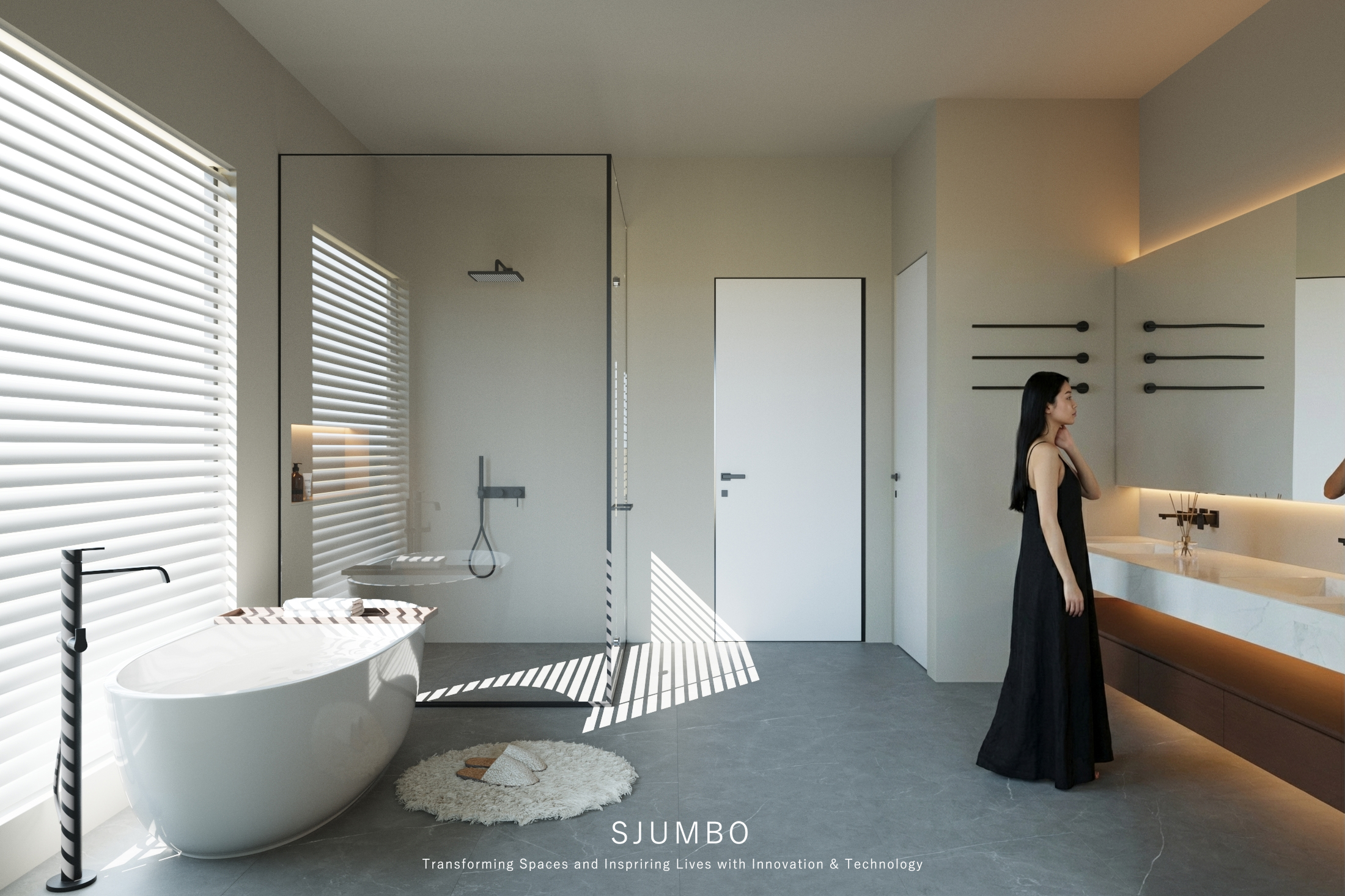
Bathroom Vanities is the core configuration of commercial hotel bathroom spaces, and its durability, aesthetics, and compliance directly affect guest experience, operating costs, and hotel brand reputation. With 16 years of experience in whole-house customization, SJUMBO has found in thousands of commercial hotel bathroom customization projects that core material selection is the key to determining the service life and comprehensive cost-effectiveness of Bathroom Vanities—hotel bathrooms are used frequently every day, wiped repeatedly with chemical cleaners, wrapped in a high-humidity environment, and even some windowless dark bathrooms are in a closed and humid state for a long time. Choosing the wrong core material often leads to door panel deformation, cabinet loosening, and edge bulging, and the subsequent renovation cost is far higher than the initial procurement investment.
Frankly speaking, many hotel project parties tend to fall into the misunderstanding of “low price first” when selecting materials initially, but ignore the special needs of Bathroom Vanities in commercial scenarios. Different from household bathrooms, commercial hotel Bathroom Vanities have to bear dozens of door openings and closings, countertop loads, and water vapor erosion every day. If the core material has insufficient moisture resistance and nail holding force, it will break down in just 1-2 years. Renovation not only requires investment in materials and labor costs but also may affect the normal operation of the hotel, which is not worth the loss. That is why SJUMBO always takes core material selection as the primary link when customizing commercial hotel bathroom vanities for customers, and provides cost-effective solutions suitable for the scene based on 16 years of practical experience.
Choosing the core material of Bathroom Vanities is essentially a balance between durability, aesthetics, cost, and compliance. The following table details the core performance of Plywood and MDF, and provides practical references combined with commercial hotel scenarios to help you avoid selection misunderstandings:
| Evaluation Criteria | Plywood | MDF (Medium Density Fiberboard) | Suitable Scenarios for Commercial Hotels |
|---|---|---|---|
| Moisture Resistance & Expansion Resistance | Excellent, with a moisture expansion rate of less than 3%. Marine-grade Plywood can remain stable in a long-term high-humidity environment and is not easy to bulge or deform. | Weak, the edge expansion rate can reach 15%-20% if not sealed. Water vapor is easy to penetrate, leading to softening and mold of the board. | Plywood: High-humidity areas such as windowless bathrooms and swimming pool side bathrooms; MDF: Only suitable for well-ventilated, low-humidity hotel bathrooms. |
| Nail Holding Force (Hinge Load-Bearing) | Strong, the cross-layer structure has strong biting force. After the hinge is fixed, it is not easy to loosen, can withstand dozens of openings and closings every day, and the service life can reach more than 10 years. | Medium, the fiber structure is loose. After long-term stress, the hinge is easy to loosen and fall off, and the general service life is only 4-5 years, requiring frequent replacement of hardware. | Plywood: High-traffic hotel lobbies, guest rooms with high occupancy rates; MDF: Auxiliary areas such as staff lounges with low usage frequency. |
| Surface Flatness & Decoration | Good, there may be slight wood grain undulations, suitable for veneer and melamine finishing to present a natural texture. | Excellent, the surface is smooth and flat, without obvious texture, most suitable for high-gloss baking paint, complex blister modeling, and higher appearance value. | Plywood: Hotels pursuing natural texture; MDF: High-end hotels requiring high-gloss, minimalist or complex shapes. |
| Environmental Compliance (VOC Control) | Depends on the quality of glue, it is recommended to select E0, EPA or TSCA Title VI certified Plywood. SJUMBO can provide complete compliance test reports. | Depends on the quality of glue, it is recommended to select CARB P2 or EU E1 certified MDF. Edge banding process must be strictly controlled to avoid VOC leakage. | Both need to meet the environmental protection standards of the region where the hotel is located; SJUMBO can customize materials according to the project’s compliance requirements. |
| Project Procurement Cost & ROI | Relatively high, 15%-25% higher than MDF, but with a long service life and low later maintenance costs, the 10-year ROI is higher. | Relatively affordable, initial procurement cost is low, but it is easy to be damaged later and needs frequent replacement, so the long-term comprehensive cost is higher. | Plywood: Long-term operated hotels pursuing cost control; MDF: Short-term renovated hotels with limited budget. |
In many large-scale chain hotel projects we serve, the cabinets of high-end commercial hotel bathroom vanities almost all prefer high-grade Plywood, especially marine-grade Plywood. Why are these hotels that pay attention to reputation and long-term operation willing to bear the slightly higher initial cost? There are three core reasons, which are also the summary of SJUMBO’s 16 years of customization experience:
Is it necessary to use Plywood completely to be the best choice? Actually not. Combining 16 years of commercial hotel customization experience, SJUMBO has developed a cost-effective bathroom vanities hybrid material solution, which not only solves the durability problem but also balances aesthetics and cost control, becoming the first choice for many hotel projects:
Cabinet carcass: Adopt 18mm high-grade Plywood (preferably marine-grade for high-humidity areas), which ensures the stability and moisture resistance of the cabinet. The cross-layer structure can firmly fix the hinges and hardware, avoiding loosening and deformation caused by long-term use.
Door panels: Adopt 18mm/22mm MDF, which has excellent surface flatness and can be made into high-gloss baking paint, matte paint or complex blister shapes to meet the aesthetic needs of different hotel styles. At the same time, SJUMBO uses high-quality PUR Edge Banding technology to seal the edges of MDF completely, effectively blocking water vapor penetration and making up for the lack of moisture resistance of MDF.
This hybrid solution not only controls the initial procurement cost within a reasonable range but also ensures the durability and aesthetics of commercial bathroom vanities. Up to now, it has been applied to more than 500 hotel projects of various types, and the customer satisfaction rate has reached 98%. As a whole-house customization brand with 16 years of experience, SJUMBO can also adjust the material specifications and combinations according to the hotel’s positioning, budget and usage scenario to create a customized solution that is most suitable for the project.
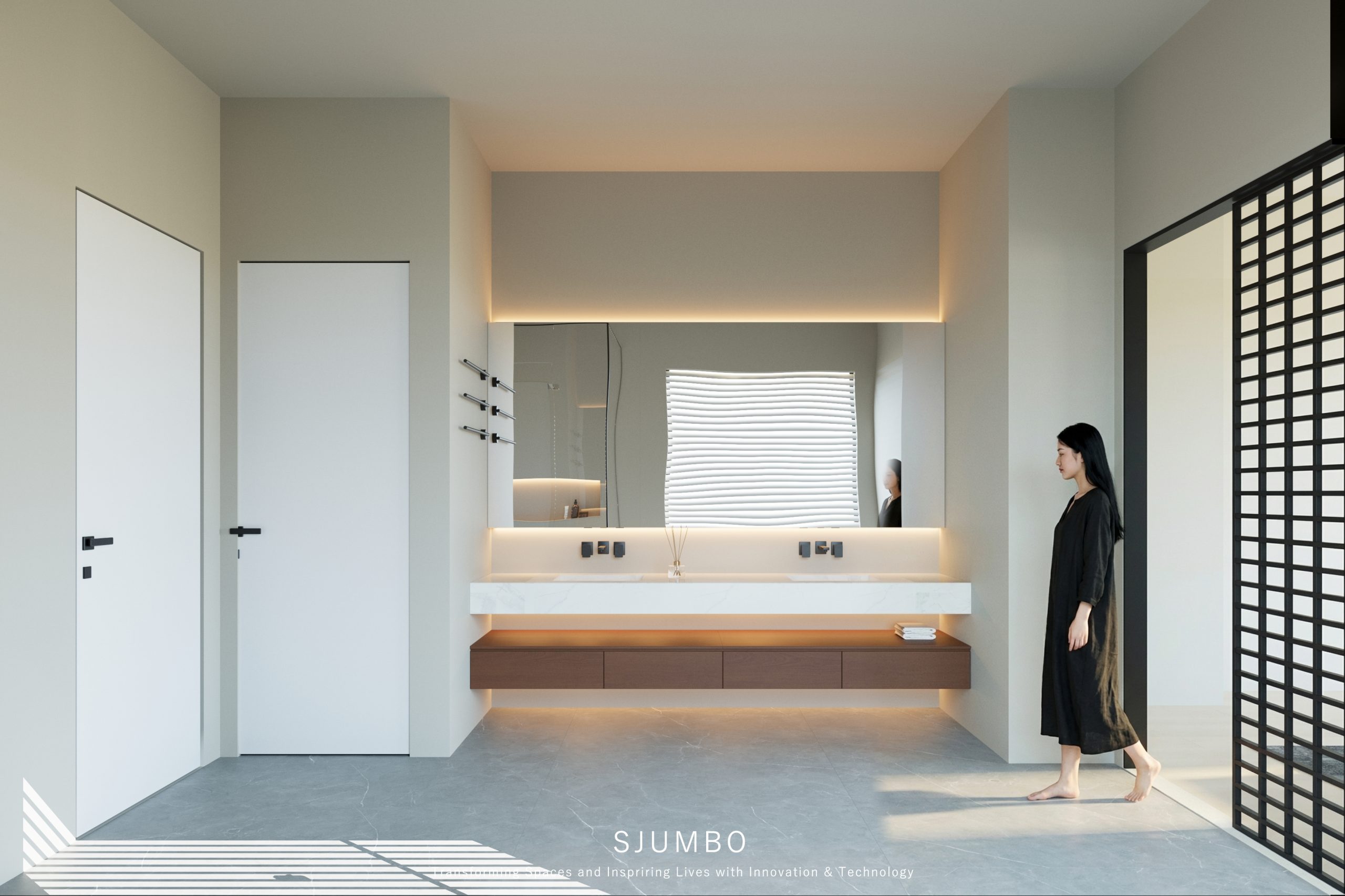
In the process of communicating with hotel project parties, we found that everyone has many doubts about the core material selection of Bathroom Vanities. Here, we sort out the most frequently asked questions and give practical answers based on SJUMBO’s 16 years of experience:
For commercial hotels, the core material selection of Bathroom Vanities is not a simple “cost comparison”, but a balance between long-term operation cost, guest experience and brand image. Plywood has irreplaceable advantages in durability and environmental adaptability, while MDF has obvious advantages in aesthetics and cost. The hybrid solution launched by SJUMBO combines the advantages of both, which is the most cost-effective choice for most commercial hotelbathroom vanities projects.
With 16 years of experience in commercial space customization, SJUMBO has always adhered to the principle of “adapting to the scene and pursuing quality”, providing professional material selection advice and customized solutions for thousands of hotel projects. If you are looking for a reliable bathroom vanities customization partner, SJUMBO will be your best choice—we will tailor the most suitable solution for you based on your project needs, and escort your hotel’s long-term operation with high-quality products and professional services.
This article is suitable for: homeowners, interior desi […]
When renovating an apartment kitchen, choosing the righ […]
Lighting design for walk-in closets is never an afterth […]
Melbourne wardrobe door warping is one of the most pers […]
Related links:
About Us Company News Industry Updates Kitchen Cabinets Bathroom Suites Wardrobes Wall Systems Doors Windows & Balustrades SSL 100% Secure Transactions