
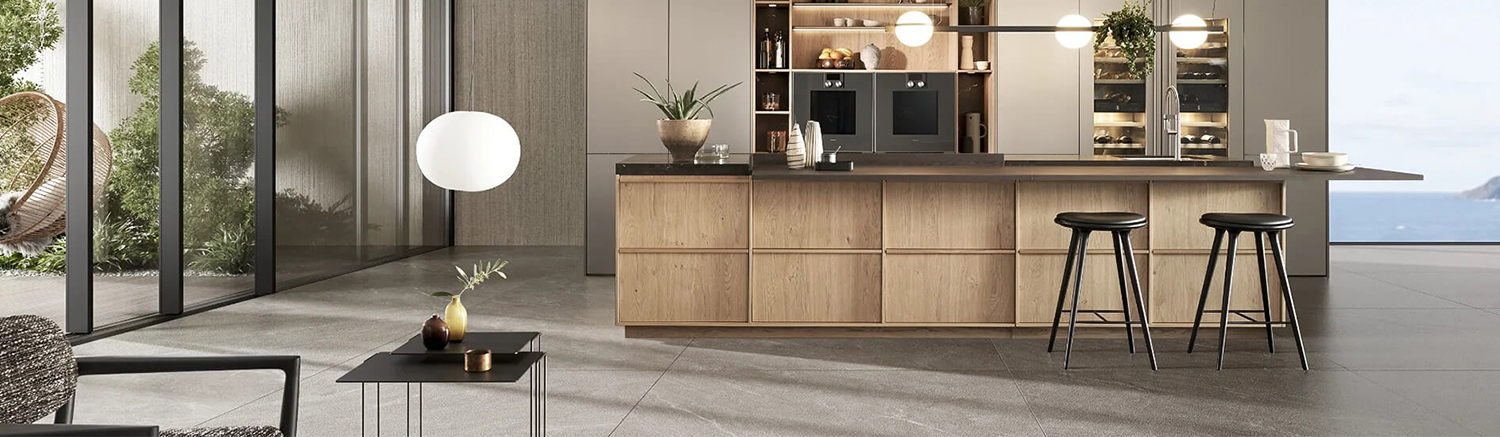
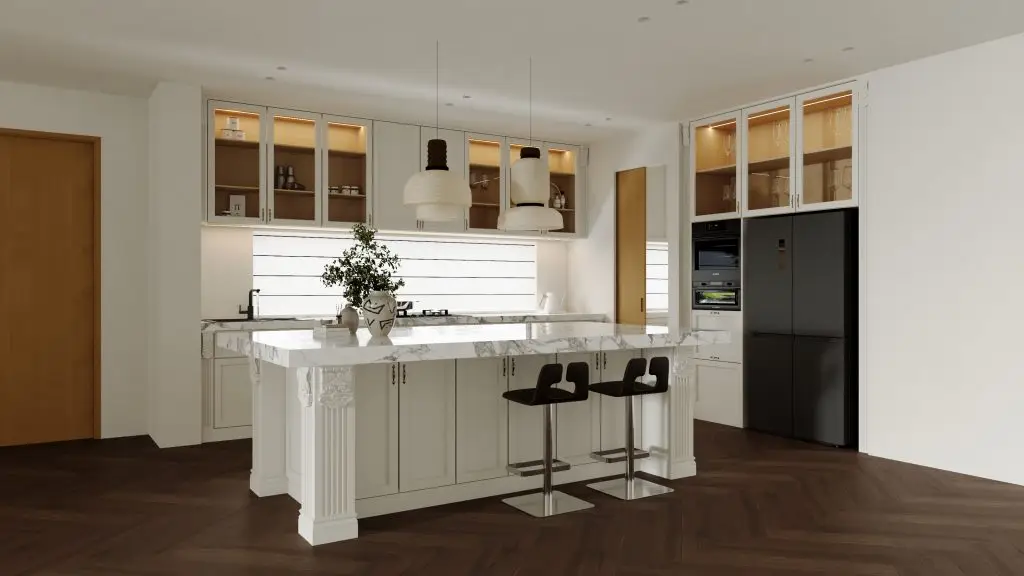
luxury property renovation for multi-family buildings and high-end rental units demands a balanced selection of durable, cost-effective, and aesthetically consistent kitchen surfaces. For property developers, contractors, and rental asset managers, countertop material choice directly impacts long-term maintenance cycles, tenant damage rates, project fabrication timelines, and overall renovation ROI. Selecting the best countertops for rental property is no longer a simple aesthetic decision but a core engineering and commercial consideration that determines asset sustainability and rental premium potential. Both quartz and sintered stone dominate modern high-end renovation projects, yet their structural specifications, fabrication tolerances, and tenant-facing durability differ drastically. This article breaks down material engineering data, bulk project adaptability, and real rental scenario performance to help B2B project teams select qualified high-end tenant-proof countertops for commercial and residential rental renovation portfolios.
Most underperforming rental renovation projects stem from mismatched material specification. Many project specifiers prioritize surface visuals while overlooking critical factors including slab thickness compatibility, cabinet carcass load-bearing limits, fabrication cracking risks, and post-occupancy tenant damage patterns. In commercial renovation cycles spanning 5–10 years, material structural stability and bulk construction efficiency often outweigh initial surface aesthetics. To standardize material selection for multi-family housing renovation kitchen countertops, we compare full engineering parameters and project-based performance data between quartz and sintered stone countertops.
The following table integrates 2026 updated industry specifications, bulk fabrication wastage data, cabinet structural adaptability, and post-installation maintenance records, covering core indicators required for commercial rental property bidding and construction specification alignment.
| Engineering & Project Dimension | Quartz Countertops | Sintered Stone Countertops | B2B Rental Project Preference |
|---|---|---|---|
| Standard Slab Thickness & Structure | 20mm / 30mm solid homogeneous slab; unified density, compatible with standard cabinet carcass load-bearing structures | 12mm / 15mm thin slab mainstream specification; 6mm thin slab requires auxiliary baseboard reinforcement to avoid structural deformation | Quartz (better cabinet compatibility) |
| Material Composition & Stability | 90%–93% natural quartz aggregate + food-grade polymer resin binder; flexible structure with strong impact buffering performance | 100% inorganic mineral sintered at ultra-high temperature; zero resin, zero porosity, high structural density with rigid brittle properties | Application-dependent |
| Heat Resistance Limit | 150°C sustained temperature resistance; resin layer undergoes thermal aging and yellowing under excessive local high temperature | 1200°C extreme heat resistance; completely fireproof and heat-insulating, no thermal deformation or discoloration | Sintered Stone |
| Mohs Hardness & Scratch Resistance | 6–7 Mohs; resistant to daily metal utensil scratches, meets basic scratch-resistant rock beam countertops project standards | 7–8 Mohs; exceeds most metal hardware hardness, achieves permanent scratch-free surface performance | Sintered Stone |
| Fabrication Wastage & Cracking Risk | Low cracking rate during cutting and hole opening; high tolerance for on-site construction errors, low bulk project wastage | High edge chipping and cracking risk during conventional cutting; requires professional precision processing to control wastage rate | Quartz (bulk project friendly) |
| Edge Finishing Adaptability | Supports diversified mitered edge vs. eased edge processing; easy shaping for apartment standardized renovation | Mitered edge processing difficulty is high; eased edge is the mainstream finished solution for engineering projects | Quartz |
| Stain & Chemical Resistance | Low-porosity compact structure; resists daily oil and beverage stains, tolerates mild daily chemical cleaning | Zero water absorption and zero capillary permeability; acid and alkali resistant, fully compliant with commercial kitchen anti-pollution standards | Sintered Stone |
| Post-Installation Repairability | Local polishing and fine repair feasible; low labor and material cost for community bulk maintenance | No effective local repair solution for chipping and cracking; overall slab replacement required for damage | Quartz |
For contractors and property management teams, material performance in actual rental operation scenarios is far more critical than laboratory parameter data. Short-term aesthetic advantages cannot offset long-term engineering maintenance risks and bulk project loss costs.
Quartz has become the preferred material for prefabricated quartz countertops for apartments and multi-family standardized renovation projects, mainly due to its highly adaptable engineering attributes. Its resin-bonded flexible structure can absorb minor impact force generated by tenant daily use, effectively reducing edge chipping and slab cracking probabilities in high-flow rental spaces.
In bulk construction scenarios, quartz features low processing difficulty and high standardization. The unified 20mm and 30mm thickness specifications match most standardized cabinet carcass structures on the market, eliminating the need for customized structural reinforcement and reducing overall project construction cycles. Even if fine surface scratches or local gloss attenuation occur after multiple tenant turnover cycles, on-site construction teams can complete renovation and polishing at low cost, which is highly compatible with the asset operation logic of long-term rental property portfolios.
It is worth noting that quartz has inherent high-temperature aging risks. In unattended rental units, random placement of high-temperature cookware by tenants will cause irreversible thermal yellowing of the resin layer. For large-scale apartment groups, centralized preventive protection and post-damage partial polishing have become standardized maintenance measures for property management teams.
Sintered stone’s core advantages focus on permanent physical stability, which perfectly meets the high-standard durability requirements of high-end customized rental projects. Its zero-porosity and high-temperature resistant properties provide long-term stable stain-resistant kitchen surfaces, avoiding surface aging and pollution fading caused by long-term tenant use, and effectively supporting high-rent premium positioning of luxury units.
However, sintered stone’s engineering application limitations are obvious. The mainstream 12mm thin slab has high requirements for cabinet flatness and load-bearing uniformity; uneven foundation installation will lead to latent cracking risks in later use. The biggest B2B pain point lies in the processing link: conventional cutting equipment is prone to edge bursting and local cracking, resulting in increased bulk project wastage and uncontrollable construction costs.
To solve the industry-wide processing pain points of sintered stone, SJUMBO adopts professional 5-Axis CNC Waterjet precision processing technology in factory prefabrication. It realizes one-time precise forming of mitered edges, eased edges and under-mount sink openings, effectively reducing on-site construction damage rate and solving the structural fragility problem of sintered stone in bulk engineering projects. This factory prefabrication mode supports integrated bulk kitchen cabinet and countertop supply, unifying project quality standards and shortening overall delivery cycles.
In commercial renovation bidding and engineering design, material selection must be matched with project positioning, tenant turnover cycle, and operation and maintenance budget. Blind pursuit of high-end materials or excessive cost reduction will both reduce project comprehensive benefits.
For medium and high-end apartment groups with annual tenant replacement and frequent unit turnover, quartz countertops are the most cost-effective engineering specification. Its standardized slab thickness, low construction difficulty, and low post-maintenance cost fit the batch operation mode of multi-family rental assets. The mature prefabricated quartz countertops for apartments system can realize rapid replication of unit standards, ensure unified visual effect of community public spaces and private kitchens, and greatly reduce project management and after-sales maintenance pressure.
For high-value luxury properties targeting high-net-worth long-term tenants, sintered stone is the preferred specification for luxury property renovation. Its seamless splicing effect, permanent anti-fouling and anti-scratch performance, and ultra-high temperature stability can maintain unit luxury texture for a long time without frequent manual maintenance. For such high-premium projects, the incremental input of sintered stone materials can be fully converted into sustained rental premium and asset value preservation, with outstanding long-term return advantages.
Yes. The polymer resin component of quartz countertops will undergo irreversible thermal aging above 150°C. Unregulated hot cookware placement by tenants will form fixed yellow heat marks on the surface, especially on light-colored slabs. This is the most common surface failure issue in high-turnover apartment renovation projects.
It depends on the project operation cycle. For properties positioned for 3+ years long-term stable leasing, sintered stone’s zero-maintenance and non-aging performance offsets the initial higher procurement and processing costs. For short-cycle turnover apartment projects, the high replacement cost after sintered stone damage will reduce overall project ROI.
For most rental projects, eased edge is more practical with lower processing difficulty and anti-collision safety performance. Mitered edge provides more high-end three-dimensional visuals but requires higher precision processing and has higher damage risks in tenant-used environments, suitable only for ultra-luxury customized units.
Adopting factory prefabrication and unified bulk supply is the core solution. SJUMBO’s 5-Axis CNC Waterjet precision processing standardizes cutting, edge finishing and hole opening processes, effectively reducing on-site construction errors and material wastage. The integrated bulk kitchen cabinet and countertop supply mode ensures consistent quality across all project units.
The core of countertop material selection for luxury property renovation and commercial rental projects is scenario-based engineering matching. Quartz countertops rely on stable construction performance, low maintenance cost and high batch replication efficiency to become the standard specification for high-turnover multi-family housing renovation. Sintered stone, with its superior physical stability and premium finishing effect, is the preferred upgrade solution for ultra-luxury long-term rental assets. Professional factory processing and integrated customization services are key factors to ensure material performance landing and project quality stability.
Planning a Commercial or Multi-Family Renovation Project? Contact the SJUMBO team today to get a Free Material Sample Kit (Quartz & Sintered Stone) and a bulk pricing quote for your upcoming project.
As a furniture brand deeply engaged in cross-border cus […]
Walking into the installation site of large-scale hardc […]
In supporting projects for high-end villas, pivot doors […]
As of February 2026, Eco-friendly Cabinets have long ev […]
Related links:
About Us Company News Industry Updates Kitchen Cabinets Bathroom Suites Wardrobes Wall Systems Doors Windows & Balustrades SSL 100% Secure Transactions