
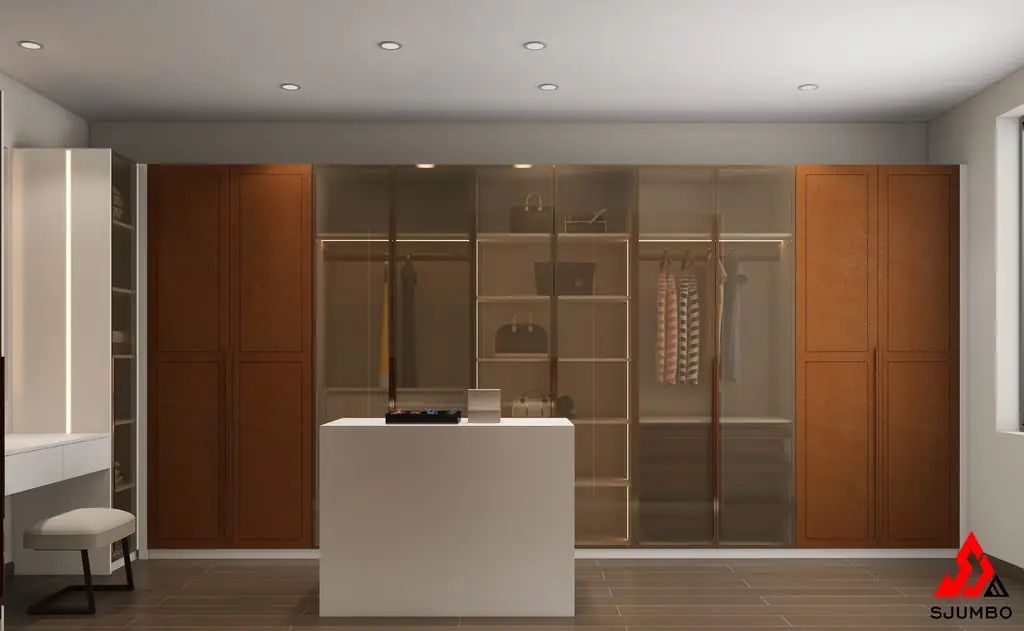
Floor-to-ceiling glass wardrobe doors are a staple of modern minimalist interior design. However, many project contractors, joinery manufacturers, and interior designers encounter a frustrating issue within months of installation: doors warping, dragging on bottom tracks, hardware pulling loose, or frames failing to seal completely.
The culprit is rarely the glass itself or the hinges—it is the structural wall thickness of the aluminum frame.
In this structural evaluation, we break down why standard 1.2mm aluminum profiles fail under continuous load and how upgrading to 2.0mm heavy-duty extruded profiles permanently resolves frame deformation.
The market demand for ultra-slim sightlines has led many suppliers to cut costs by using 1.2mm or even 1.0mm wall thickness aluminum profiles. Understanding the causes of deformation in high-end wardrobe aluminum doors is crucial before selecting materials for large-scale projects. While these doors look sleek in showroom displays, real-world job sites paint a very different picture.
When evaluating slim frame wardrobe door profile wall thickness selection, relying solely on visual aesthetics is a major pitfall. To evaluate long-term mechanical stability, we conducted load and torsion testing on a standard high-end wardrobe door size (2400mm H x 600mm W with 5mm tempered glass).
Aluminum frame strength relies heavily on screw engagement. A standard M4 tap screw into a 1.2mm profile frame offers only 1.5 to 2 active thread turns, making it prone to thread stripping under heavy daily use. A 2.0mm profile frame provides nearly 3.5 full thread engagements, increasing screw pull-out force from 0.8 kN to 2.3 kN.
| Structural Metric | 1.2mm Wall Thickness Profile | 2.0mm Heavy-Duty Profile | Impact on B2B Projects |
| Max Recommended Height | ≤ 2100 mm | ≤ 2800 mm (Floor-to-ceiling) | Enables full-height custom joinery |
| Glass Weight Capacity | Up to 20 kg/panel | Up to 45 kg/panel | Accommodates laminated & textured glass |
| Fastener Pull-Out Force | ~0.8 kN (Risk of stripping) | ~2.3 kN (Heavy hinge support) | Eliminates hinge dropping & door drag |
| 5-Year Warpage Deflection | > 4.0 mm (High service risk) | < 0.8 mm (Structurally stable) | Reduces post-installation service calls |
| Target Application | Low-budget standard closets | High-end residential & commercial cabinetry | Enhances client satisfaction & brand value |
Achieving defect-free floor-to-ceiling glass doors requires a complete systematic approach rather than just relying on thicker metal extrusions. B2B buyers and contractors must evaluate four critical engineering dimensions:
| Engineering Dimension | Technical Execution Standard | Practical Value for B2B Projects |
| Wall Thickness Strategy | Base frame utilizes ≥ 2.0mm T6 structural-grade aluminum profiles | Ensures foundational rigid resistance against frame twist under continuous heavy load. |
| Integrated Hardware Fitting | Multi-point corner lock keys combined with deep-thread screw sleeves | Prevents joint separation and thread stripping under repetitive dynamic opening forces. |
| Concealed Straightener Selection | How to choose slim wardrobe door straighteners: Opt for built-in mechanical tension rods with bidirectional adjustment | Allows precise fine-tuning to counteract seasonal temperature changes and structural deflection for panels over 2400mm. |
| Glazing Stress Management | Full-perimeter high-elasticity EPDM rubber gaskets with flexible setting blocks | Isolates glass edges from direct metal contact, absorbing thermal expansion and operating impact. |
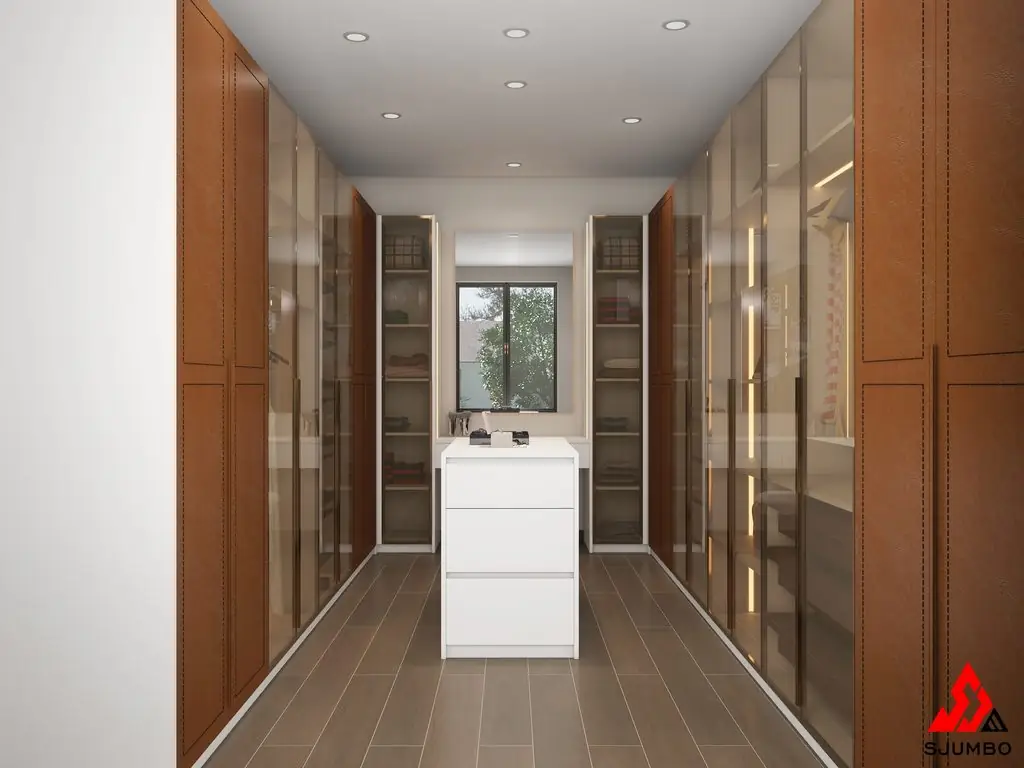
A 2.0mm structural profile provides the necessary foundational rigidity, but for extreme door heights (≥ 2700mm), system design requires a holistic approach. It is recommended to combine 2.0mm extrusions with an internal tensioner system, heavy-duty soft-close cabinet hinges, and proper hinge spacing (adding a 4th top hinge to handle upper leverage).
From a front profile view, sightline widths can look nearly identical. However, from the side and under touch, a 2.0mm frame feels significantly more solid and premium. More importantly, the real difference is operational longevity—2.0mm systems eliminate door sagging and cut warranty claims by over 95%.
High-end extrusions support various architectural finishes, including Anodized Matte Black, Brushed Titanium, Gunmetal Gray, and Electrophoretic Satin Finishes. All treatments are fingerprint-resistant, scratch-resistant, and tested against salt-spray corrosion.
In high-end interior joinery, long-term structural integrity should never be compromised for initial cost savings. While 1.2mm profiles may suffice for standard short cabinet doors, floor-to-ceiling glass wardrobe applications demand the enhanced flexural rigidity and fastener retention of a 2.0mm heavy-duty profile system. By combining proper wall thickness with internal tensioners and engineered corner joinery, contractors and manufacturers can deliver minimalist glass doors that remain perfectly aligned and fully functional for years to come.
1. The 24-Hour Pre-Handover Disaster A day before the o […]
Cracks and edge chipping frequently occur when installi […]
When sourcing luxury beach hotel furniture supply solut […]
luxury property renovation for multi-family buildings a […]
Related links:
About Us Company News Industry Updates Kitchen Cabinets Bathroom Suites Wardrobes Wall Systems Doors Windows & Balustrades SSL 100% Secure Transactions