
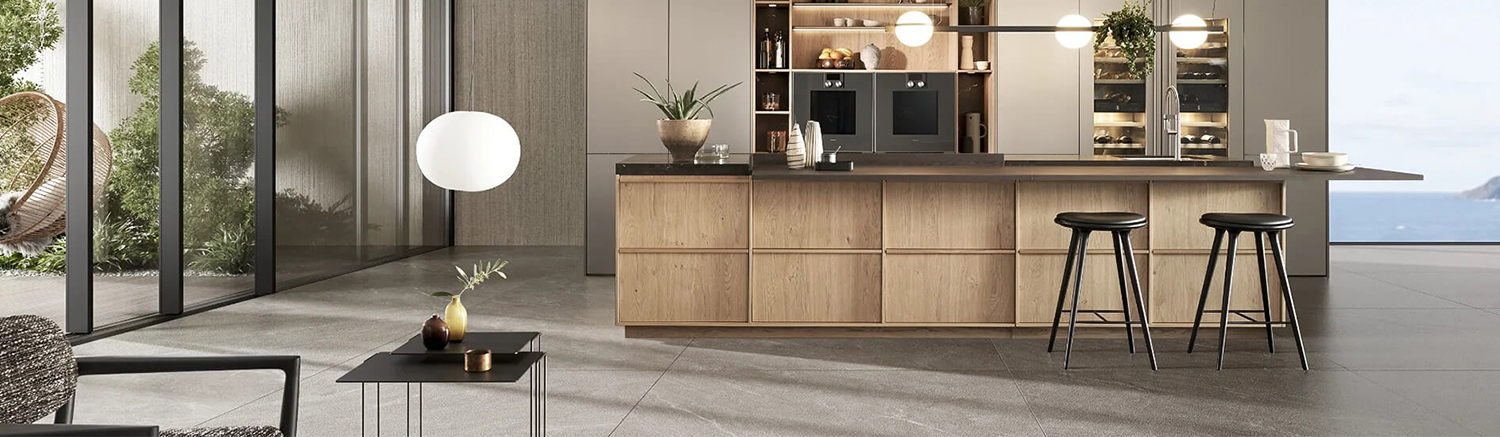

Six months after handover on a luxury beachfront residence in Sydney’s Northern Beaches or Melbourne’s Mornington Peninsula, the phone call every builder dreads comes in: The “premium” outdoor kitchen is showing rust, and the cabinet doors are jamming. The homeowner points to ugly brown corrosion stains bleeding onto their marble pavers. The cabinet installer points at the factory. The factory blames the salty sea breeze. In the end, the builder is left holding the bill for a costly warranty repair and a damaged reputation.
Designing and specifying materials for coastal outdoor kitchen joinery in Australia isn’t a matter of simple interior styling—it’s an unforgiving engineering decision. Ocean salt, brutal UV radiation, and rapid temperature shifts will expose every sub-spec material faster here than almost anywhere else in the world.
At SJUMBO, we specialize in bespoke full-case joinery manufacturing for Australian commercial and residential projects. Here is our practical engineering breakdown on 304 vs 316 stainless steel outdoor cabinets and HPL compact laminate weather resistance.
If your project is located within 1 km of the Australian coastline, use this 5-point material survival guide:
| Engineering Metric | Grade 304 Stainless Steel | Grade 316 Stainless Steel | Outdoor Exterior-Grade HPL |
| Salt Spray Defense | Fails early near salt water. Prone to tea staining within 3–6 months. | Superior. Contains 2–3% Molybdenum to prevent chloride pitting. | 100% Non-Metallic. Completely immune to rust and salt air. |
| Aussie UV Index Survival | Unaffected metal surface; powder coatings risk fading if low grade. | Unaffected metal surface; raw steel maintains full integrity. | Excellent ONLY IF specified with specialized exterior PVDF or EBC protective layers. |
| Thermal Stability | Low expansion rate (17.3 × 10⁻⁶ / K). High structural rigidity. | Low expansion rate (16.0 × 10⁻⁶ / K). High structural chassis rigidity. | Moderate expansion (~1.5–2.5mm/m). Requires slotted CNC screw fixings. |
| Maintenance Need | High near coast (Needs regular fresh-water washdowns & polish). | Low-to-Moderate (Occasional rinse removes surface ocean salt crust). | Near Zero (Stain-proof, wipe-clean, highly scratch-resistant). |
| Best Project Application | Sheltered suburban or inland sites (>1km from salt spray). | Coastal structural frames, bare benchtops, ocean-facing chassis. | High-end decorative fronts (woodgrain, stone, matte tactile doors). |
Engineering Rule of Thumb: For sites within 1km of breaking ocean waves, specify a Grade 316 Stainless Steel internal carcass combined with Outdoor-grade Exterior HPL door fronts.
Standard interior boards or low-spec outdoor cabinetry disintegrate quickly under local marine conditions:
SJUMBO Recommended Hybrid System:
- Door Fronts: Exterior-Grade HPL (EBC/PVDF UV Protection Layer)
- Internal Carcass: Grade 316 Marine Stainless Steel (Molybdenum Alloy)
- Hardware: Passivated 316 Stainless Fasteners with Nylon Isolation
The key chemical difference between Grade 304 and Grade 316 comes down to one single addition: Molybdenum (Mo).
Exterior-grade HPL compact laminate is manufactured by compressing resin-impregnated Kraft papers under intense heat (>140°C) and pressure (>7 MPa).
Building custom outdoor cabinetry that lasts 10+ years requires precise manufacturing standards:
A: Yes, but only if it is fully protected by a high-durability outdoor powder coat (such as Dulux Duratec) and washed down regularly with fresh water. For raw, unpainted metal within 1 km of the coast, Grade 316 is strongly recommended to avoid surface tea staining.
A: Yes. While 100% waterproof, exterior HPL moves slightly due to humidity and temperature changes. Proper joinery design requires incorporating 2 to 3 mm expansion joints and slotted fixing points during manufacturing and installation.
A: The most reliable combination is a Grade 316 Marine Stainless Steel structural carcass paired with UV-resistant Exterior HPL door fronts and Grade 316 hardware. This hybrid approach prevents internal rust, avoids UV fading, and provides extensive design flexibility.
Don’t risk project warranties on standard materials pushed beyond their limits. SJUMBO works with Australian builders, developers, and designers to supply commercial-grade, fully customized alfresco joinery engineered specifically for marine environments.
Contact the SJUMBO Engineering Team today to request material samples or submit your project drawings for an estimate.
As the core of home storage, the design of the custom w […]
In 2026, One-Stop Building Material Suppliers have beco […]
In the delivery of full-home custom projects, floor-to- […]
In humid coastal climates where relative humidity consi […]
Related links:
About Us Company News Industry Updates Kitchen Cabinets Bathroom Suites Wardrobes Wall Systems Doors Windows & Balustrades SSL 100% Secure Transactions