If you manage multi-family residential developments, coastal resorts, or high-end architectural renovations featuring unvented bathrooms, you are likely familiar with a common warranty headache: the bathroom vanity.
It is a recurring issue across high-end projects. Within one to two years after handover, standard cabinetry in damp environments begins to display core swelling, peeling edge-banding, door misalignments, rusted hinges, and persistent musty odors. Continuous relative humidity (RH) levels between 80% and 100%, combined with marine air laden with salt spray, create a punishing environment for traditional MDF, particleboard, and standard moisture-resistant plywood. Compounding the physical degradation, trapped ambient moisture often accelerates the secondary off-gassing of residual formaldehyde from synthetic adhesives, compromising indoor air quality.
To eliminate these post-occupancy defects at the specification stage, premier developments are moving away from wood-based substrates. When analyzing bathroom vanities in high-humidity regions, design and procurement teams increasingly focus on two engineered solutions: aluminum bathroom vanities and carbon fiber bathroom vanities.
Substrate selection dictates long-term performance. If the foundational material is unsuited for high moisture, surface-level sealants will ultimately fail.
Modern aluminum bathroom vanities bear no resemblance to the cold, industrial metal lockers of the past. They represent a sophisticated synthesis of structural engineering and high-end aesthetic finishing.
Derived from aerospace and motorsport engineering, carbon fiber reinforced polymers (CFRP) have transitioned into ultra-luxury architectural joinery.
To assist architects and procurement heads in drafting performance specifications, the following matrix evaluates key performance metrics across materials:
| Performance Metric | Aluminum Vanity System (SJUMBO Spec) | Carbon Fiber Vanity | Traditional Plywood / Moisture Board |
| 100% RH Resistance | Zero water absorption; no swelling or mold | Zero water absorption; absolute structural stability | High susceptibility to core swelling, delamination, and mold |
| Salt-Spray Corrosion | Specialized PVDF/powder coatings withstand thousands of salt-spray hours | Chemically inert; completely immune to salt corrosion | Edges absorb salt-laden moisture; hardware rusts prematurely |
| Toxicity & VOCs | Zero Formaldehyde (E0/LEED compliant); pure metal substrate | Non-toxic once fully cured (medical-grade stability) | Relies on resin binders; risk of ongoing secondary off-gassing |
| Load-Bearing & Anti-Sag | High flexural rigidity; easily supports heavy sintered stone basins | Extreme tensile strength; floating wall-hung units resist sagging | Prone to bowing or sagging under heavy stone tops when damp |
| Commercial ROI | High Cost-Efficiency; balanced durability, aesthetics, and budget | Ultra-luxury positioning; high raw material and tooling costs | Low initial purchase price, but high long-term callback risks |
Marine air carries micro-droplets of salt that rapidly oxidize standard cabinet hardware and degrade raw board edges. Beyond substrate selection, comprehensive surface protection is vital for coastal projects. For insights on safeguarding joinery against marine corrosion, review our technical guide on coastal resort furniture protection against paint peeling and rust, which details multi-layer anodization and marine-grade 304/316 hardware specifications.
In metropolitan multi-family towers or adaptive reuse projects, bathrooms frequently lack exterior windows. Even with mechanical ventilation, relative humidity remains elevated for extended periods after use. Non-porous aluminum and carbon fiber vanities deny mold spores an organic food source, ensuring a clean, odor-free, zero-VOC interior environment.
Q1: Do aluminum bathroom vanities feel cold or sterile in a residential master bath?
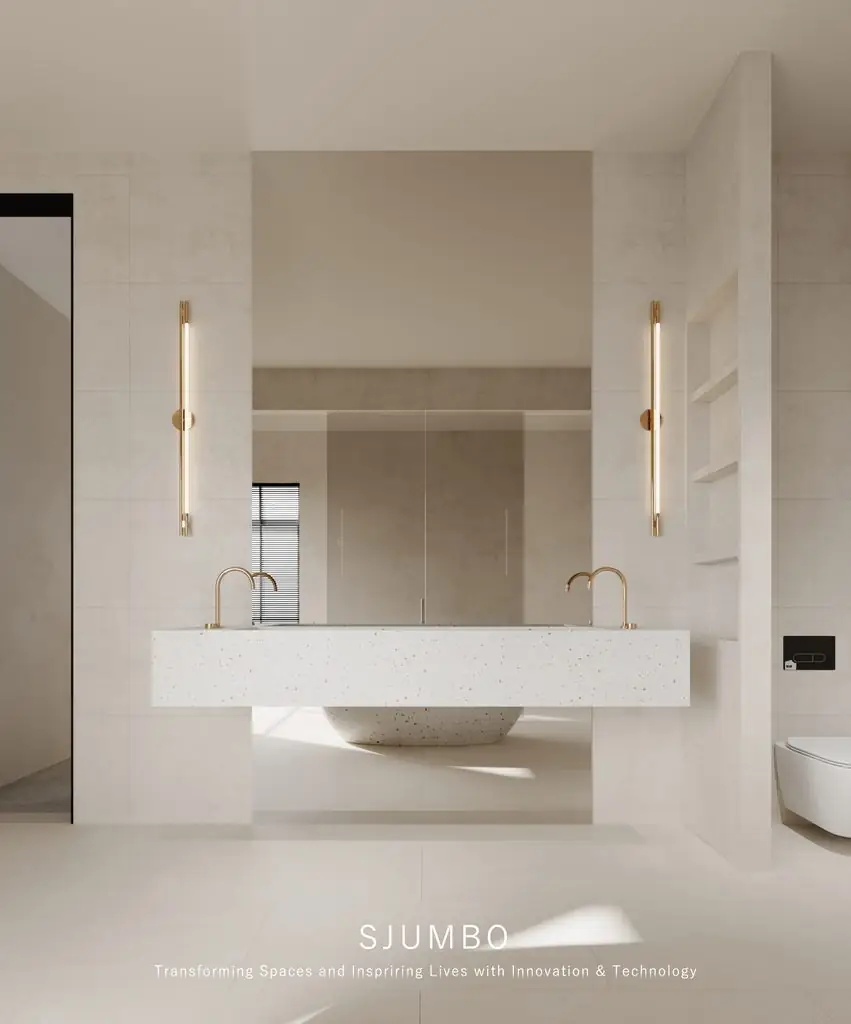
Answer: Contemporary high-end aluminum vanities utilize micro-textured fluorocarbon coatings and advanced thermal transfer finishes. These treatments offer a smooth, warm tactile experience and visually replicate natural wood grain or architectural matte stone, integrating fluidly into luxury interior design schemes.
Q2: Which material offers superior value for large-scale commercial procurement?
Answer: While both materials deliver exceptional moisture and mold resistance, commercial practicality often favors aluminum. Carbon fiber involves high initial tooling costs and extended lead times, making it ideal for exclusive ultra-luxury villas. Aluminum vanity systems provide design flexibility, seamless hardware compatibility, scalable manufacturing, and an optimal return on investment for multi-family and hospitality developments.
As a global manufacturing partner for whole-house custom joinery and architectural millwork, SJUMBO delivers high-performance solutions engineered to withstand demanding operational environments. If you are currently specifying or procuring joinery for coastal or high-humidity developments, contact our technical engineering team to request project specifications, material samples, and customized B2B quotations.
The sloped attic area in many homes is clearly a potent […]
In the home furnishing market of February 2026, owners […]
1. Concealed Acoustic Pain Points in High-Density Micro […]
White lacquer cabinets are the top choice for most home […]
Related links:
About Us Company News Industry Updates Kitchen Cabinets Bathroom Suites Wardrobes Wall Systems Doors Windows & Balustrades SSL 100% Secure Transactions