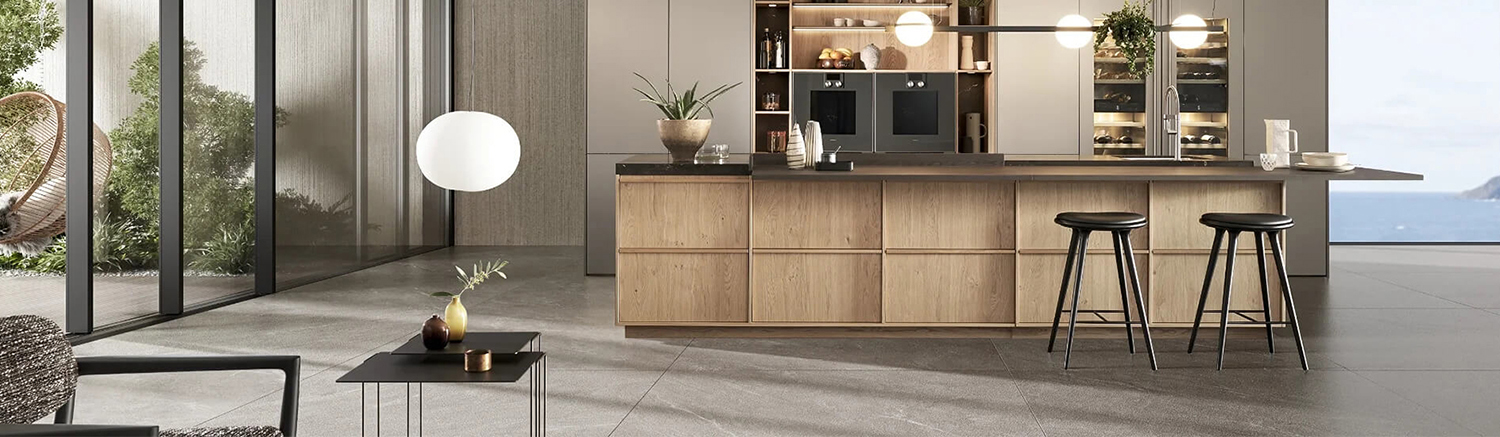
Looking for custom cabinetry manufacturers in the USA that can ship a whole house on one PO? Ten real plants, six checks, and where each one stops working.
Editor’s note: SJUMBO builds whole-house cabinetry and millwork in Guangzhou, China, and publishes this page. We ranked ourselves first, so read that as an advertisement and the other nine entries as research. Those nine are real American manufacturers, listed with the limits that rule them out of some jobs. On one kitchen with a twelve-week deadline, two of them will beat us. Where one of them is the better buy, the entry says so. We also cannot install for you.
Nobody in the United States searches for whole-house customization. They search for custom cabinetry manufacturers, then a millwork shop, then a closet company, then an interior door plant. Four trades, four purchase orders, four schedules that stop talking to each other in week six.
Three failures repeat. Doors from one vendor and wall panels from another arrive in two whites that matched on a phone. Fourteen boxes show up for a corner 18mm out of square. The kitchen lands in March, the vanities in May, and the punch list outlives everyone’s patience.
So we scored ten custom cabinetry manufacturers and millwork plants on six criteria you can verify without a factory visit. Nine are American. One is ours.
| Criterion | Why It Matters |
|---|---|
| Scope: cabinets, millwork or doors | The US splits these into separate trades. Scope decides whether you manage one supplier or four, and who owns the joints between them. |
| Customization depth | True custom means any dimension. Semi-custom means a 3-inch grid plus fillers. Only one of those fits a 2,740mm wall without a scribe piece. |
| Box, finish and hardware spec | 18mm plywood versus 15mm particleboard, PET film versus catalyzed lacquer, a named hinge model. This is where 40% of a price gap lives. |
| US compliance paperwork | CARB Phase 2 and EPA TSCA Title VI are federal requirements for composite wood. Missing reports stop a container, not a conversation. |
| Lead time and container math | Six to twelve weeks domestically, three to four months imported. CBM and consolidation decide landed cost on anything bigger than one kitchen. |
| Field measure and parts support | Somebody owns the tolerance on an out-of-square wall, and somebody pays the freight on the missing door in month five. |
| Manufacturer | Location | Scope | Price Tier | Customization | Lead Time | Best For |
|---|---|---|---|---|---|---|
| SJUMBO | Guangzhou, China | Cabinets + millwork + doors + windows | Factory direct | Full custom, any dimension | 45-60 days + 25-40 days ocean | Whole-house packages on one PO |
| Plain & Fancy | Schaefferstown, PA | Cabinets only | Premium | True custom, hand built | 10-14 weeks | Kitchens with no repeat geometry |
| Crystal Cabinet Works | Princeton, MN | Cabinets only | Premium | True custom, framed or frameless | 8-12 weeks | Built-to-order kitchens and baths |
| Wood-Mode | Kreamer, PA | Cabinets only | Luxury | 200+ door styles | 8-12 weeks | Catalyzed lacquer finishes at scale |
| Dura Supreme | Howard Lake, MN | Cabinets only | Upper mid | Semi-custom and custom lines | 6-10 weeks | Builder programs needing flexibility |
| Wellborn Cabinet | Ashland, AL | Cabinets: kitchen, bath, storage | Mid to upper mid | Modified semi-custom | 5-8 weeks | Family builders buying whole-home sets |
| StarMark | Sioux Falls, SD | Cabinets only | Upper mid | Near-custom semi-custom | 6-9 weeks | Designers who need door range |
| Omega Cabinetry | Waterloo, IA | Cabinets only | Premium | Semi-custom to custom | 8-12 weeks | High-spec kitchen and bath packages |
| TruStile Doors | Denver, CO | Interior doors + casing | Premium | Full custom, arched and glass | 6-10 weeks | Doors that must match the cabinetry |
| California Closets | Richmond, CA | Closets and storage | Premium | System-based, franchise | 4-8 weeks | Fast closet installs, one market |
Lead times are dealer-side ranges for standard finishes. Planning inputs, not commitments.
Location: Guangzhou (Liwan District), China
Specialty: Kitchen cabinets, bath vanities, closets, wall panels, interior doors, windows and balustrades on one order.
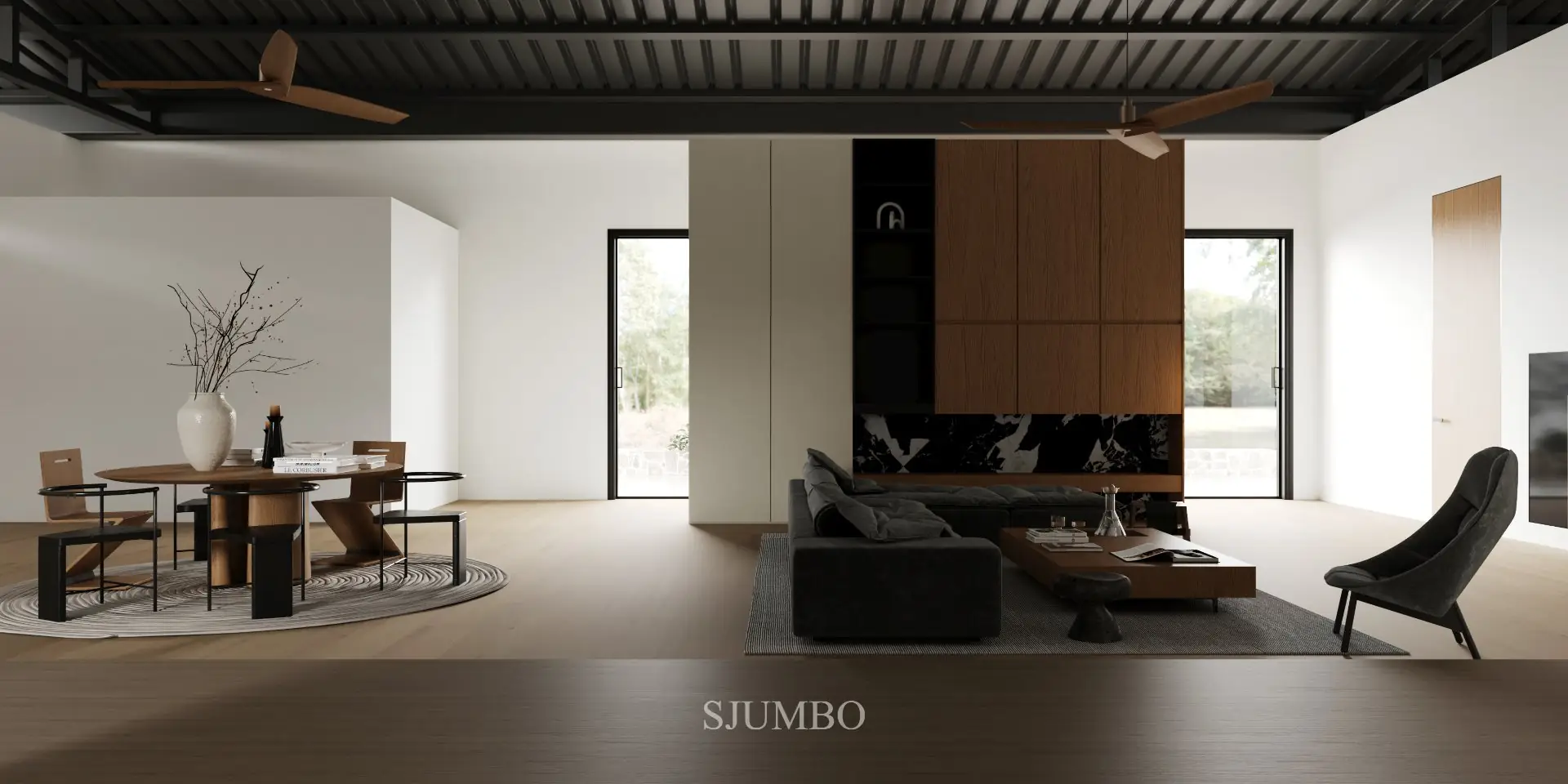
One PO covers the kitchen, three baths, two walk-ins, every wall panel and every door, arched French doors included. Doors cut from one board batch and shot on one finish line do not fight each other in daylight. Boxes run 18mm plywood or particleboard, backs 5mm or 9mm, 1-2mm PVC edge banding on PUR glue, moisture content 8-12%.
Ideal for: Builders shipping eight rooms or more per unit.
Project fit: We cannot install for you, and one vanity is not worth a container. Send floor plans and elevations for a factory quote.
Location: Schaefferstown, PA
Specialty: Hand-built true custom cabinetry, in production since 1968.
This is the shop architects call when a 22-inch baking cabinet sits beside a 41-inch sink run and neither can move. Every box follows the drawing instead of a size grid, and the finish room has sprayed the same colors for years. You get one reveal. This tier is what you pay so it lands right the first time.
Ideal for: Architect-led custom homes and historic renovations.
⚠️ Limitation: The brand changed hands in 2024, so confirm lead time and warranty terms in writing. Plan on ten to fourteen weeks, cabinets only, with no stock program to fall back on.
Location: Princeton, MN
Specialty: Fully custom cabinetry built per order since 1947, on framed and frameless platforms.
Most plants pick a side: face-frame for traditional work, frameless for modern. Crystal runs both, which matters when one house wants an inset face-frame kitchen and a frameless full-height bath vanity. They build outside the usual 3-inch step, so a run against old plaster needs no 4-inch filler pretending to be design.
Ideal for: Whole-home cabinet packages for one high-end residence.
⚠️ Limitation: Nothing is made before release, so a week-seven island change is slow and expensive. Scope stops at cabinets.
Location: Kreamer, PA
Specialty: Luxury cabinetry since 1942, known for a deep door catalog and catalyzed lacquer.
Wood-Mode is the reference American dealers use when a client wants a kitchen that still photographs well in ten years. Catalyzed lacquer cures harder than nitrocellulose and holds up to hand oils and cleaning spray. Matching a stain to an imported floor or a 1920s stair rail is a color-lab job, and this plant keeps the lab in-house.
Ideal for: Luxury kitchens and butler’s pantries.
⚠️ Limitation: Production stopped in May 2019 and restarted that year under new ownership. Confirm ownership, warranty continuity and lead times before a deposit. It is also the priciest route on this list, and it ships cabinets only, so doors and closets come from someone else.
Location: Howard Lake, MN
Specialty: Semi-custom and custom lines, framed or frameless, in production since 1954.
Most searches for custom kitchen cabinet manufacturers land here eventually. Dura Supreme is the tier a production builder graduates to after outgrowing a stock line. Wider door and finish range than the mass brands, a real custom option when a plan needs one, and dealer support that understands a 60-unit release. Value engineering happens at this tier. Swap a drawer box or a door profile and the room still looks like someone paid for it.
Ideal for: Production builders running repeat plans.
⚠️ Limitation: Part of MasterBrand since July 2024, so program lines and dealer terms can shift. The semi-custom grid still limits odd ceiling heights, and there is no door or panel scope.
Location: Ashland, AL
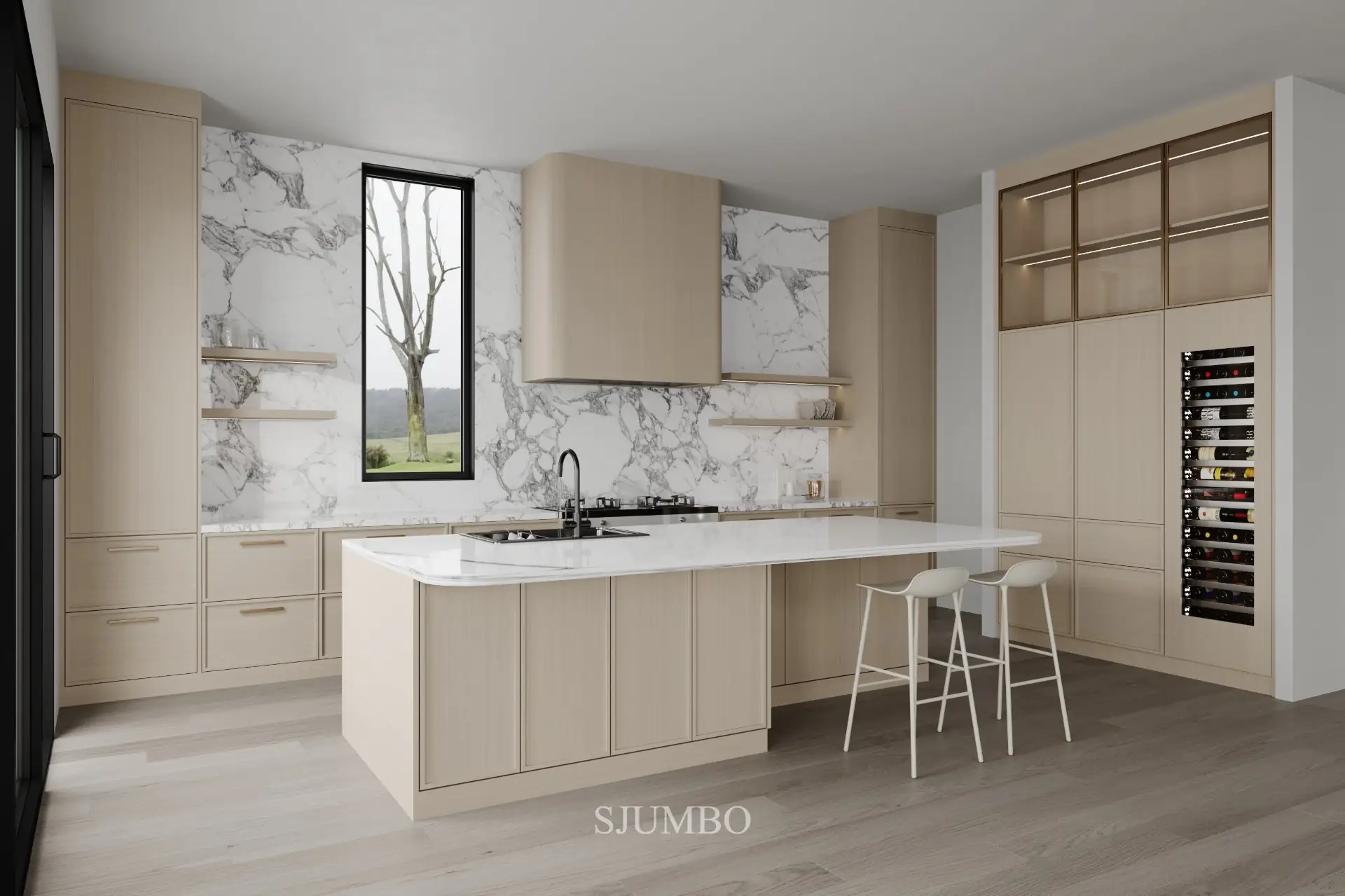
Specialty: Family-owned since 1961, kitchen, bath and storage cabinetry as one coordinated program.
Wellborn is the practical middle: a family-run plant broad enough to furnish a house in one finish family at a price a fixed budget survives. Kitchen, bath and storage come from one catalog, so a spec home avoids three unrelated constructions behind three unrelated door styles.
Ideal for: Regional builders doing 10 to 200 homes a year.
⚠️ Limitation: Coverage is dealer-based and strongest in the Southeast, so West Coast freight and schedule friction are real. Modified semi-custom, not true custom: ask about 45-degree corners before you draw one.
Location: Sioux Falls, SD
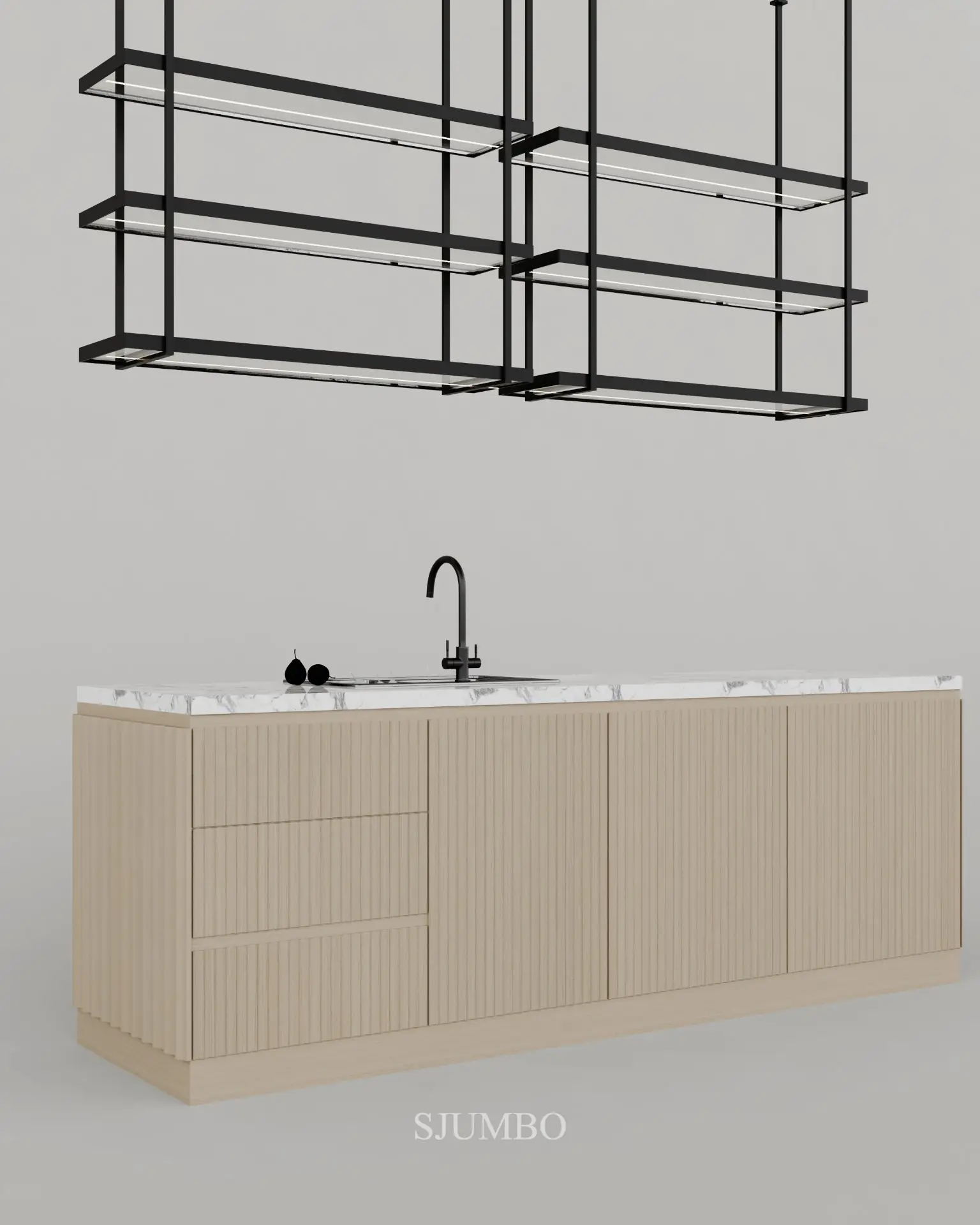
Specialty: Semi-custom cabinetry that behaves close to custom on doors, finishes and fittings.
StarMark exists for the designer whose client has a strong opinion about door profiles. The range is wide for the tier, finishes are cleanly executed, and interior fittings are specified rather than improvised. Price it against Dura Supreme on one elevation and you learn whether the upgrade budget belongs in doors or drawers.
Ideal for: Design-build firms specifying one home at a time.
⚠️ Limitation: Dealer channel only; the factory will not quote a homeowner. Finish upgrades climb toward Omega pricing quickly.
Location: Waterloo, IA
Specialty: Premium kitchen and bath cabinetry at the top of a multi-brand group.
Omega is where a dealer sends the client who wants a walnut bath vanity and a painted kitchen in the same house, both to a high standard. Spec is generous, finish control is tight, and the brand carries weight on a submittal sheet. If taste is the risk rather than budget, spec Omega and stop shopping.
Ideal for: Luxury renovations and amenity spaces.
⚠️ Limitation: Top of the price ladder with a thinner dealer network. Minimum order and design review time bite on small jobs, and it ships cabinets only.
Location: Denver, CO
Specialty: Custom interior doors including arched and French glass units, with matching casing.
When a package needs a 9-foot arched French door matching the kitchen’s stained oak, this is the American plant that does it without a special-order argument. Unlike the interior door manufacturers most builders know, this one starts from your elevation rather than a size list. Construction runs from engineered stiles to solid wood, and their shop drawings usually match your elevations. Money spent on the doors is visible from the island every morning.
Ideal for: Custom homes with one door and cabinet palette.
⚠️ Limitation: Doors only. Order cabinets elsewhere and the stain match is your problem. Oversize and arched units ship as special freight, adding weeks.
Location: Richmond, CA
Specialty: Closet and storage systems, measured and installed through a national franchise network.
California Closets solves what builders underestimate: two walk-ins, a pantry, a mudroom and a laundry that all need to look deliberate. Where most custom closet manufacturers sell components, this one sells a measured, installed, warranted result. The system compresses design and install into a short cycle, and the franchise handles measure and fit. If closets are the last trade on a tight schedule, buying a finished service instead of millwork is a legitimate call.
Ideal for: Builders who want closets off their plate.
⚠️ Limitation: Franchise-owned, so price, wait time and install quality vary by market. Scope ends at storage, and the profile is not a 2.0mm load-bearing aluminum frame.
Also worth a quote: Shiloh Cabinetry (Dudley, MO) for all-plywood boxes, Medallion (Waconia, MN) for mid-market material range, KraftMaid (Middlefield, OH) for retail reach, Simpson Door (McCleary, WA) for wood doors since 1912.
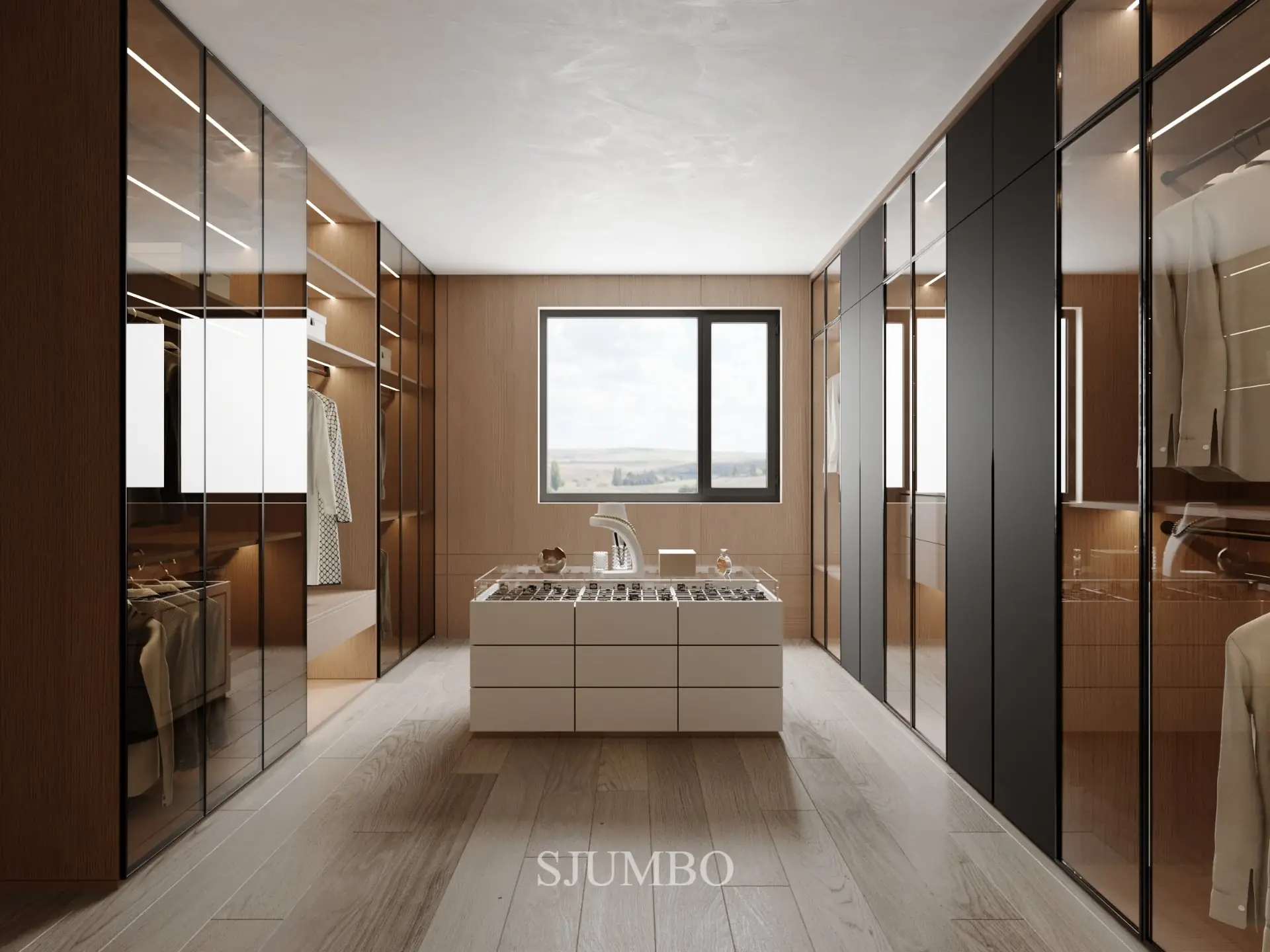
Seven categories, and they are not interchangeable. Kitchen cabinets and bath vanities are casework: 18mm plywood or particleboard boxes, 5mm or 9mm backs, 1-2mm PVC edge banding on PUR glue, doors and drawer fronts in PET film or catalyzed lacquer. Closets run the same box logic with a different interior: rails, drawer banks, and in a walk-in, aluminum-framed glass doors that carry load rather than just hiding a shelf.
Wall panels and doors are where a package stops being a cabinet order. Panels are milled to the room, so the 2,740mm wall on site is never quite the 2,740mm wall on the drawing. An interior door is a hung component with its own tolerance stack: frame, casing, floor gap, and a hinge position that has to agree with the panel reveal beside it. Windows and balustrades add glazing and a load-bearing aluminum profile, and those are the two items that fail a code review before they fail an inspection.
One supplier for all seven buys you one board batch and one color standard. That is the whole argument, and it is worth real money on a job where two whites have to match across a kitchen, three baths and a hallway. It also concentrates the risk: if the board batch is wrong, every category is wrong at once, and the container arrives with the mistake multiplied by seven.
The interface nobody quotes is field tolerance. Walls move, floors are not level, and an 18mm out-of-square corner is normal in a US renovation. Put the 50-100mm filler plate allowance and the refit responsibility in the PO before production, not in an email after install. On a single-supplier package the same company owns both sides of that gap, which is either the reason to buy or the reason to walk, depending on what the clause says.
Most custom millwork manufacturers will quote wall panels and casework and stop there; almost none will also quote the doors, the windows and the balustrade on the same drawing set. That gap is the one this whole list is about.
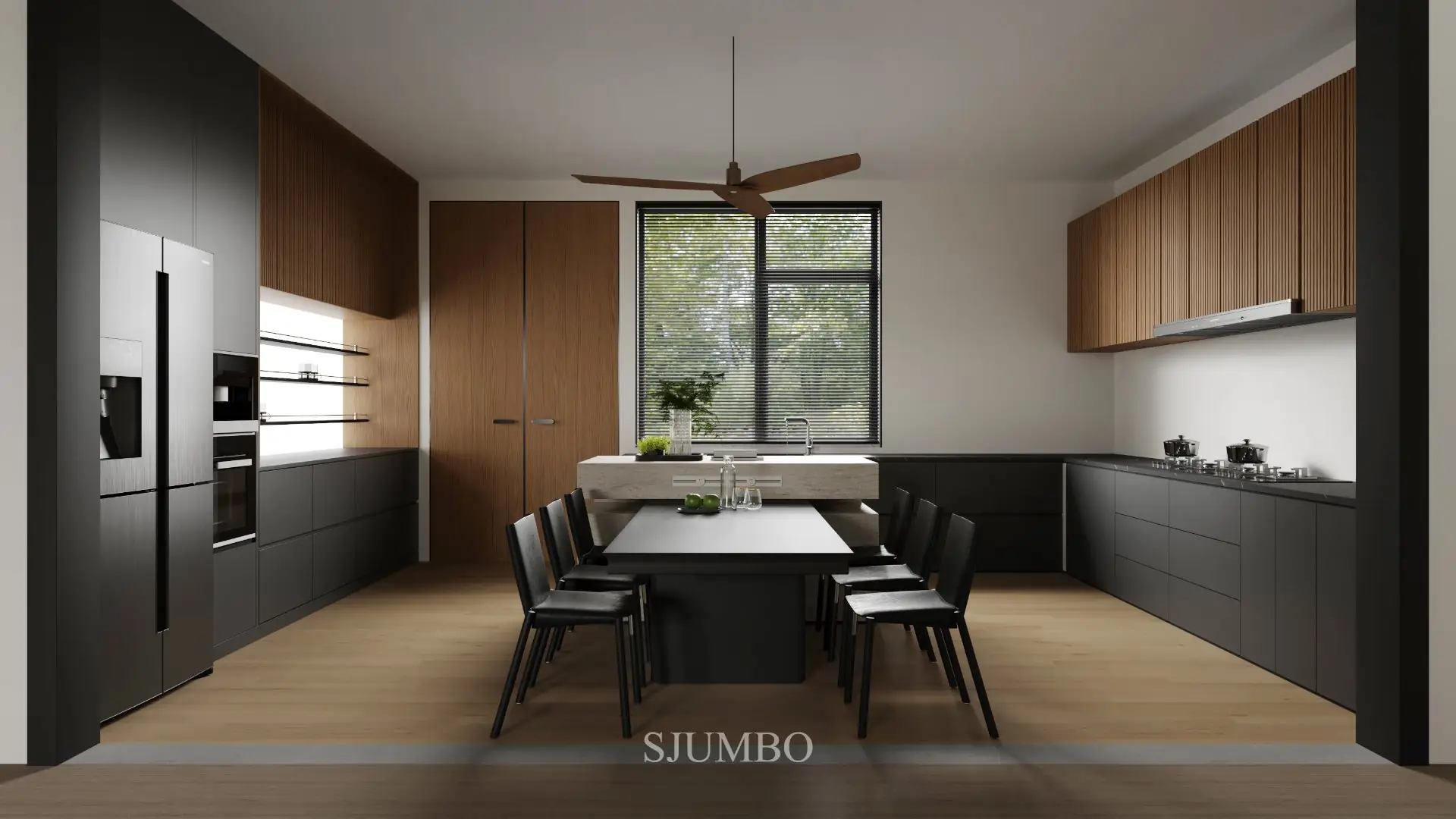
Custom cabinetry in the US runs about $150-$250 per linear foot for stock, $220-$400 for mainstream, $400-$650 for semi-custom and $650-$1,200 for true custom in 2026, which puts a 10×10 kitchen at $3,000 to $15,000 and up. Installation is separate at $50-$200 per foot. Confirm every number on your own drawings.
| Tier | Per Linear Foot | 10×10 Kitchen | Lead Time (US Plant) | Where It Fits |
|---|---|---|---|---|
| Stock / value | $150-$250 | $3,000-$5,000 | 2-4 weeks | Rentals, flips, budget multifamily |
| Mainstream | $220-$400 | $4,400-$8,000 | 5-8 weeks | Production homes, spec builds |
| Semi-custom | $400-$650 | $8,000-$13,000 | 6-10 weeks | Custom homes, upgraded amenity spaces |
| True custom | $650-$1,200 | $15,000 and up | 10-14 weeks | Architect-led kitchens |
| Install labor (separate) | $50-$200 | $2,000-$8,000 | n/a | Budget 15-25% of cabinet cost |
Cabinets only, and about 20 linear feet per 10×10 kitchen. Verify with three quotes before you commit.
Stock and mainstream, $150-$400 per linear foot. Rentals, flips and budget multifamily live here, at 2-8 weeks from a US plant. The trade is honest: fewer door profiles, a fixed size grid, and a finish nobody will ask to survive a decade of hand oils. Spec it and move on to the next building.
Semi-custom, $400-$650 per linear foot. This is the tier where a production builder stops arguing with the plan. A 3-inch grid plus fillers covers most rooms, the 6-10 week lead fits a build schedule, and the upgrade budget goes into doors or drawer boxes instead of a custom dieline. It stops working at odd ceiling heights and outside a 45-degree corner.
True custom, $650-$1,200 per linear foot. Architect-led houses and historic renovations, 10-14 weeks, and every box follows the drawing. What the money buys is the drawing being obeyed and one reveal, not a better hinge. If the deadline is twelve weeks from today, this tier is already late before the deposit clears.
Installation, $50-$200 per foot or 15-25% of cabinet cost. On an imported package, budget the fitter’s time for a flat-pack or pre-assembled delivery, a two-trip fit around field measurements, and a punch list. It is the cheapest line on the quote and the one that decides whether everything above it looks right.
| What to Check | Why It Matters |
|---|---|
| Box material and thickness | An 18mm plywood box holds a screw after the second reinstall. A 15mm particleboard box does not. Ask for the section drawing, not the brochure. |
| One finish family across rooms | PET film, melamine and lacquer age differently. One finish system and one color standard, or the house reads as two projects. |
| Hardware model numbers | “Blum soft close” covers a $3 hinge and a $14 hinge. Times 400 doors, that line item is your margin. |
| CARB Phase 2 and TSCA Title VI reports | Federal requirement for composite wood sold in the US. No report, no delivery. |
| Who owns the field tolerance | Walls move. Put refit responsibility and the 50-100mm filler plate allowance in the PO, not in an email. |
| Container plan and install sequence | Whole-house orders ship by CBM and install by room number. Lose the numbering and the crew idles for a week. |
Pro tip: Get the box section drawing, the finish sample and the hardware list before the price. Two quotes 30% apart are almost never the same cabinet.
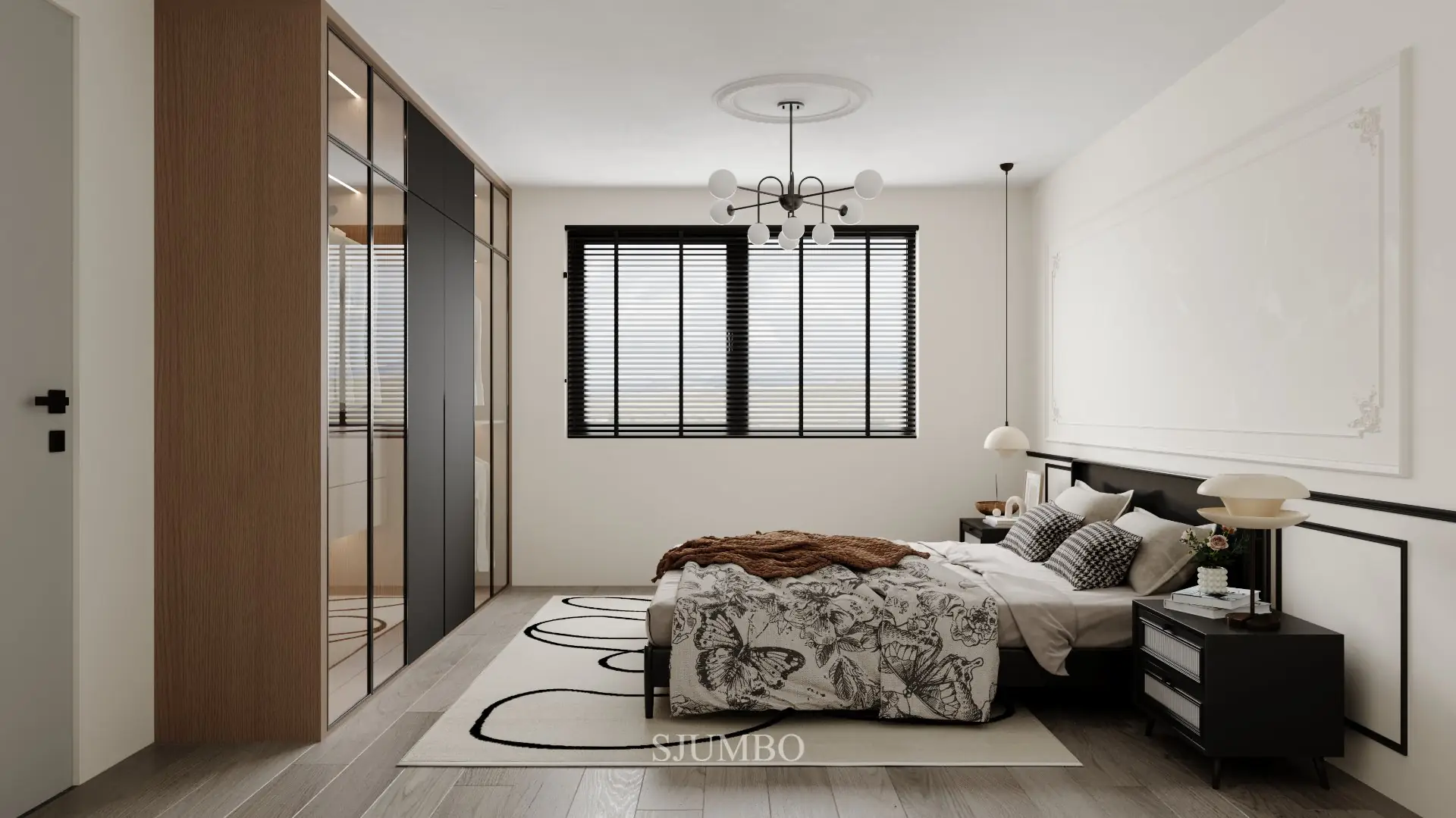
Essentially no. American production splits by trade: cabinet plants make cabinets, door plants make doors, closets come from a third channel. The architect or general contractor stitches the package. That gap is why a turnkey factory exists.
US plants run six to twelve weeks, true custom nearer fourteen. Imported adds two to three weeks of design and remeasure, 45 to 60 days production, then 25 to 40 days on the water. Budget three to four months.
Kitchen cabinets and vanities entering the US carry a 25% Section 232 tariff as of late 2026, scheduled to rise to 50% on January 1, 2027, and the rate applies whether the order ships assembled or flat-packed. Confirm the current rate with your customs broker, and ask whether your quote is FOB or DDP – a factory-direct price leaves room to absorb part of the duty that a dealer markup would pass straight through. Rates move; treat any number here as a planning input, not a quote.
Composite wood must meet EPA TSCA Title VI, which aligns with CARB Phase 2. Ask for the test report and the panel supplier. KCMA certification is voluntary but dealers often require it.
Stock, mainstream, semi-custom and true custom run about $150 to $1,200 per linear foot, driven by box, finish and hardware. Installation is separate at $50 to $200. Treat those as industry ranges and confirm them on your drawings.
On an import order, run five steps: drawing, remeasure by you or a third party, factory shop drawing, your sign-off, production. Agree tolerance and refit cost in writing first. A wall 18mm out of square is normal. A supplier with no tolerance clause is not.
Crate by room, number cartons in install order, load by weight and CBM. Panels cube out before they weigh out; stone and glass do the opposite. A 40HQ holds about 65 to 68 CBM; a five-room package runs 45 to 55. The arithmetic is set out in the consolidated shipping and CBM guide.
US brands commonly give limited lifetime on boxes and five to ten years on hardware. Overseas factories offer one to five years plus parts. The numbers that matter are parts response time and who pays freight on the missing door.
If your project is one kitchen and your deadline is ten weeks, buy American. Plain & Fancy, Crystal, Wood-Mode and Omega earn their price on exactly that job, and a domestic plant takes the call in month four when something is wrong. If the job is a whole house or twelve apartment units, the arithmetic changes: one supplier, one board batch and one container beat four trades arguing over a 20mm gap at the panel joint.
The check is boring and it works. Section drawing, finish sample, hardware model, compliance report, tolerance clause, container plan. Get those six pages before money moves. Guests never see the purchase order behind your hallway, but they feel it every time a door closes flat and the panel matches the cabinet two feet away.
Send floor plans, elevations and a room schedule. You get a factory quote with the box spec, finish system and hardware models written out line by line, plus a container plan by room.
Request your factory quote here, and read what changes when doors, panels and cabinets share a factory before you shortlist.
In current high-end home decoration, the minimalist win […]
If you manage multi-family residential developments, co […]
A bathroom vanity is the centerpiece of both functional […]
Bathroom vanity warping and sound insulation collapsing […]
Related links:
About Us Company News Industry Updates Kitchen Cabinets Bathroom Suites Wardrobes Wall Systems Doors Windows & Balustrades SSL 100% Secure Transactions